
Inspiration
The Clothes Make the Character
Imagine you’re all nestled into your favorite nook with your knitting to watch the latest adaptation of Jane Austen’s Northanger Abbey. The BBC have decided to emphasize the psychological drama and supernatural undercurrents of one of Austen’s most neglected novels and you’re ready to be immersed in early 1800s England.
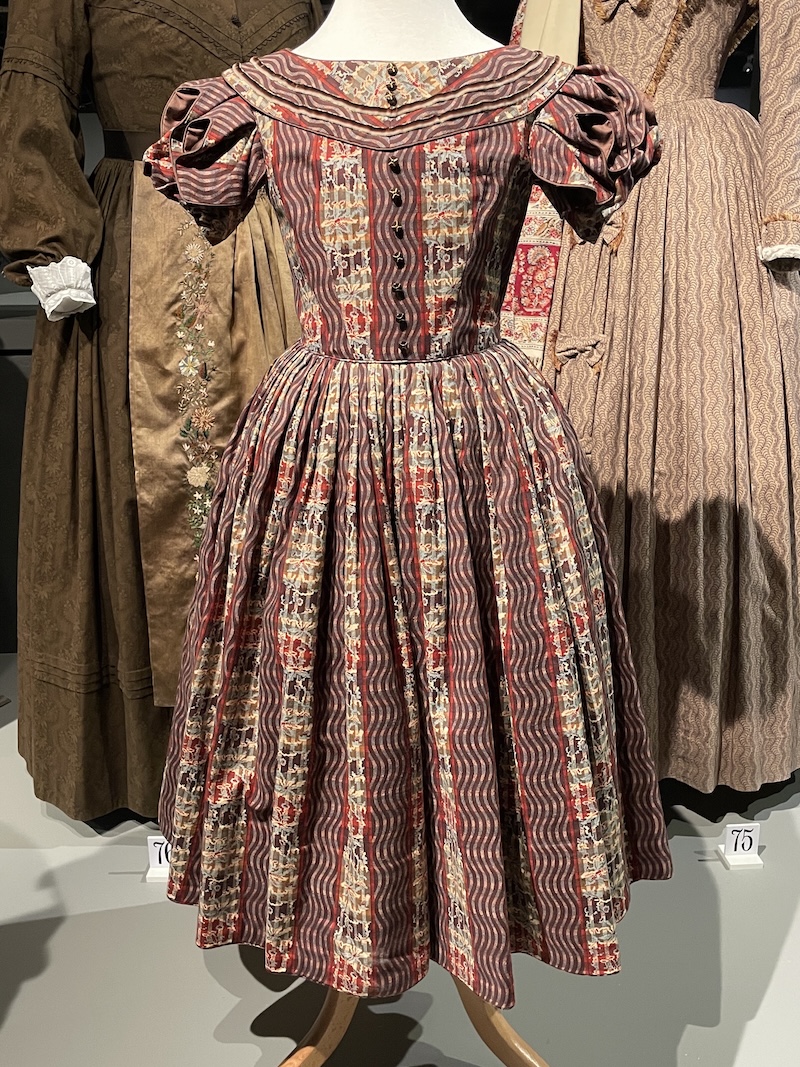
Michael O’Connor’s BAFTA- and Oscar-nominated costume for Rochester’s daughter Adèle Varens in Jane Eyre (2011).
As the camera tracks down a tree-lined drive to a truly forbidding, grey English country house, Rachel Portman’s slightly dissonant soundtrack warns you of the confusion to come between reality and the Gothic imagination.
You’re ready to meet our heroine Catherine Morland. Her carriage arrives and the home staff are poised to meet her. She steps out of the carriage wearing her favorite traveling sweat pants, her hand-knitted rainbow-colored striped sweater, and Crocs with mismatched socks.
Now, you might think, “Ok, I’ll roll with this and see where it goes.” But you were probably hoping to be treated to the parade of the costumes that we’ve come to adore from A Room With a View and the original Pride and Prejudice miniseries to Downton Abbey and Mrs Harris Goes to Paris. Those trailing bombazine Victorian mourning dresses and crisp linen traveling suits take us everywhere from repressive drawing rooms to ships bound for India.
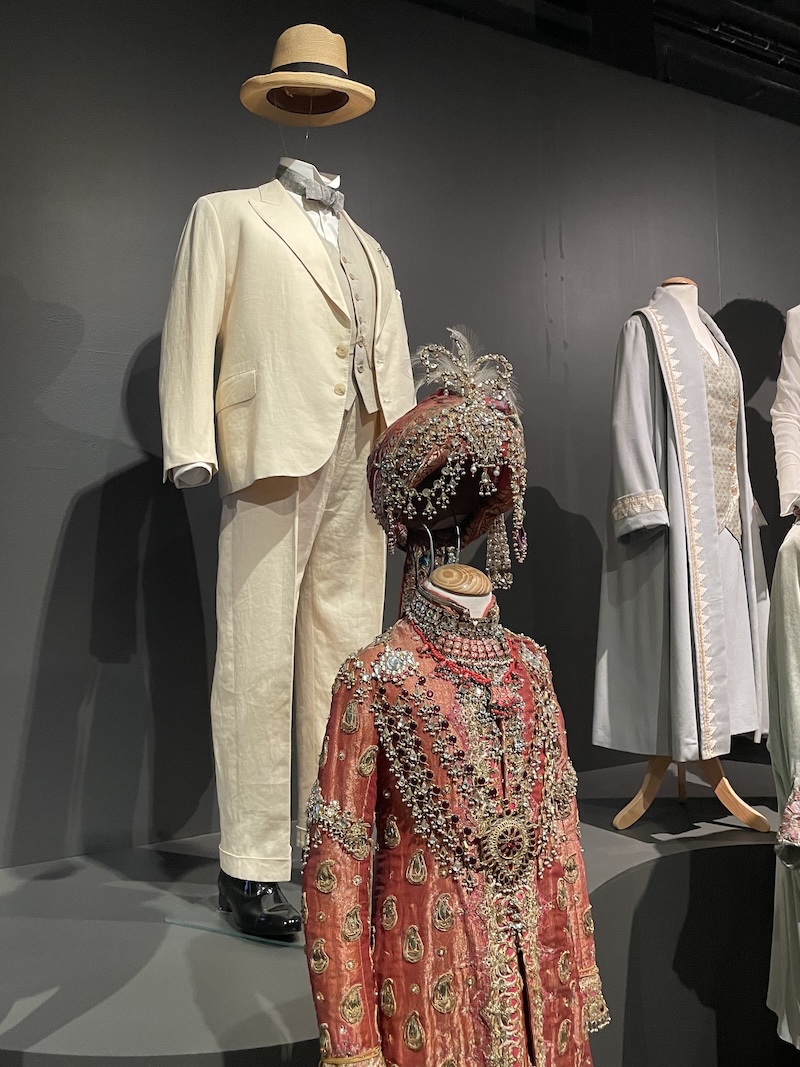
In the foreground the Little Maharaja’s costume for Indiana Jones and the Temple of Doom (1984) by Anthony Powell. In the background, Sheena Napier’s costume for Agatha Christie’s Hercule Poirot in Death on the Nile (2004).
On a wet, cold Wednesday, I took myself down to the Fashion & Textile Museum in Bermondsey, London, where I was swept into the fantasy world of dozens of well-known novels brought to life on film by John Bright and Cosprop. With one sweep of Marie Antoinette’s crinoline, I was reminded of just how much we rely on exquisitely made clothes to tell the story of lost loves and dastardly betrayals.
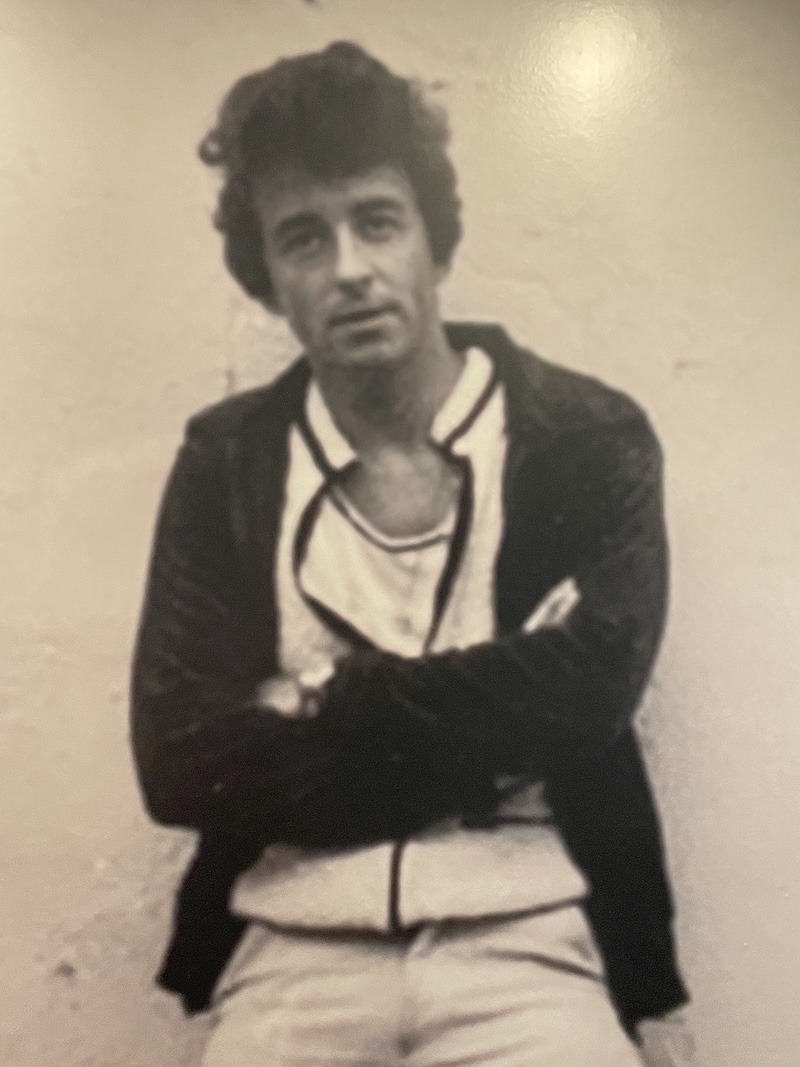
John Bright, 1970s. Photo by Christine Hill.
In the 1950s, John Bright was a trained actor, stage manager, and costume designer for British repertory theatre. He also had a passion for collecting historical clothing from Paris and London flea markets. He amassed a substantial collection at a time when clothes from the Georgian through Victorian periods weren’t widely collected. His aim was to be able to touch fabrics and look inside clothes to gain a deep understanding of garment construction and materials.
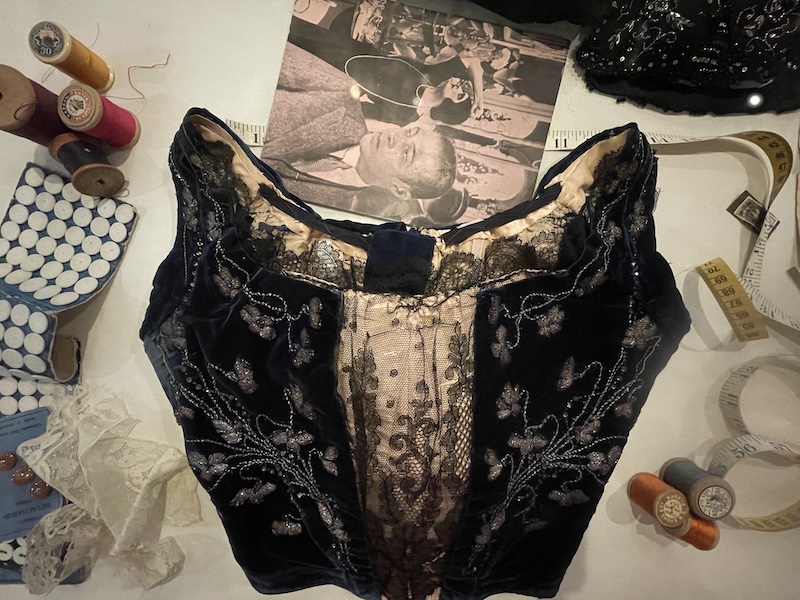
Bodice Purchased by John Bright from a Paris market in 1958. One of the first objects in the Cosprop study collection.
Museums and archives held historical clothes in their displays and stores, but these were usually inaccessible, especially in terms of touching them or turning them inside out.
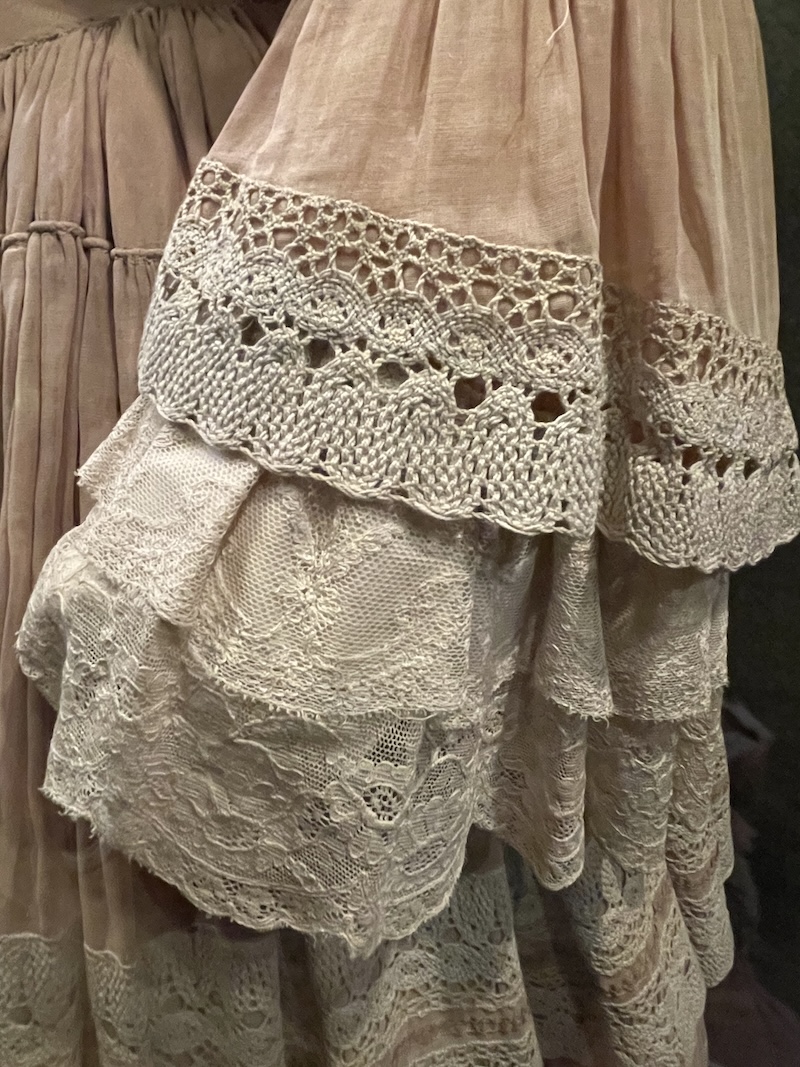
Sleeve lace detail from an 1850s dress for Lady Scarlett in Charge of the Light Brigade.
Bright wanted to build a collection that could be handled, investigated, and even deconstructed in order to help him and his contemporaries create authentic costumes. This wasn’t just so the actors would look good. Bright truly believed that the right costume could bring a character to life for the actor and help them inhabit their role.
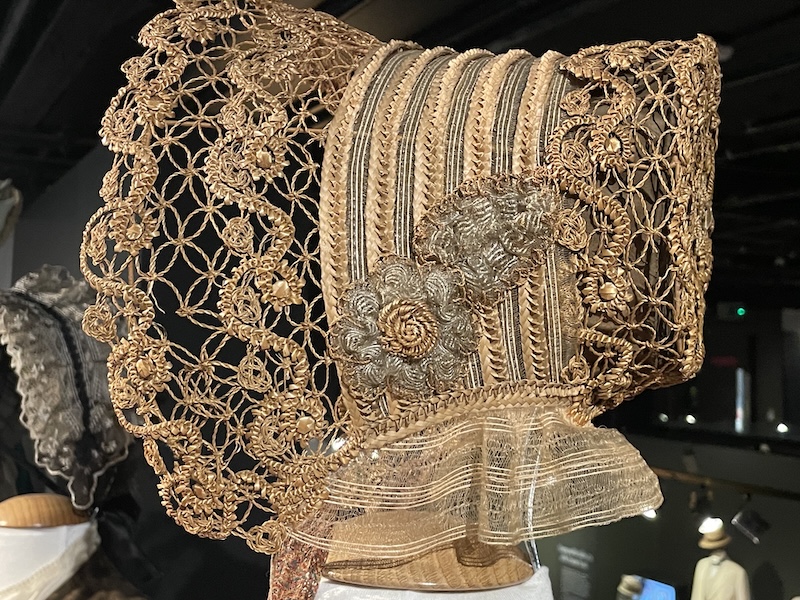
Bonnet for Mia Wasikowska’s Jane Eyre.
In 1965, Bright founded his costume house Cosprop and has never looked back. With the initial success of Charge of the Light Brigade in 1968 and War and Peace in 1972, Cosprop quickly became a source for research, design, and costumes. In 1985 when Bright and Jenny Beaven won an Oscar and a BAFTA for their costume designs for A Room With a View, Cosprop’s reputation as the foremost resource for historical costumes was confirmed.
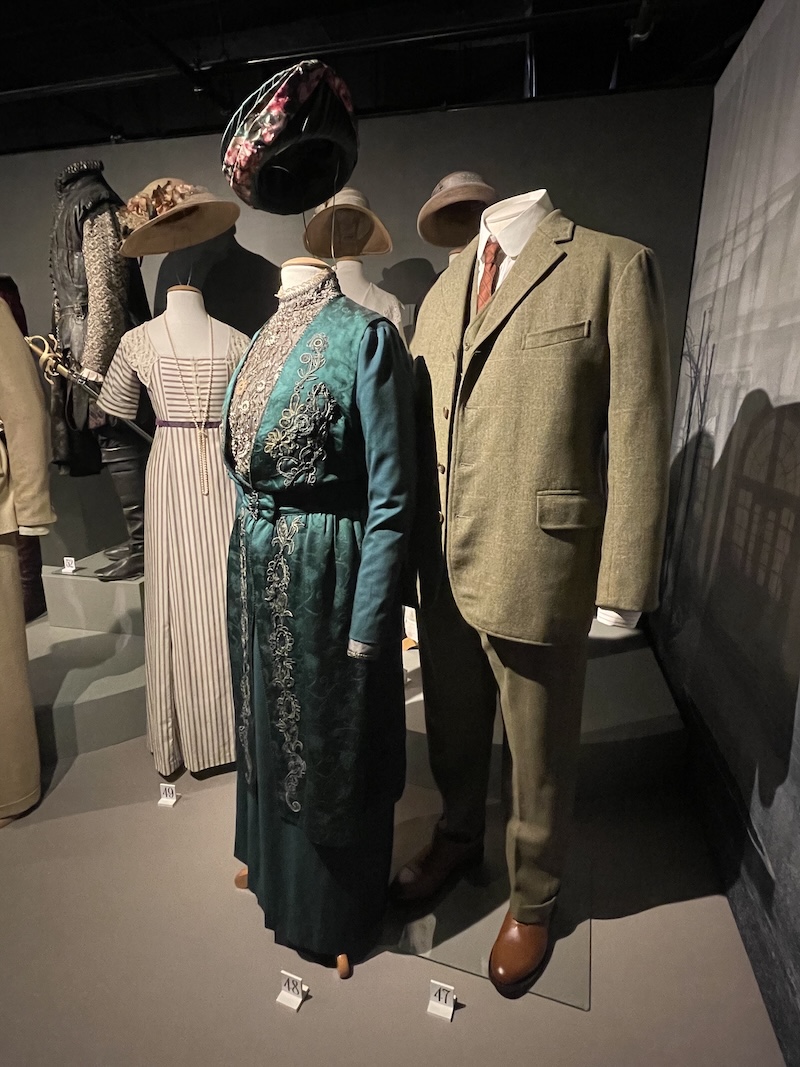
Emmy award-winning costumes for the Earl of Grantham (Hugh Bonneville) and the Dowager Countess of Grantham (Maggie Smith) by Buxton, McCall, Ebbutt, and Robbins.
Perhaps without knowing it, you will have admired Bright’s work—and the work of hundreds of designers and makers who’ve worked with Cosprop. Jack Sparrow, Elizabeth Bennet, Mr. Darcy, Marianne Dashwood, the Earl of Grantham, Queen Victoria, Jane Eyre, Aunt March, Emma, and Thomas Jefferson are just a few of the characters brought to life with needle and thread by Cosprop. Sometimes they made as many as 400 costumes for an individual film as in Jefferson in Paris. Other times, they magicked up a key character like the lovable Belgian sleuth Hercule Poirot.
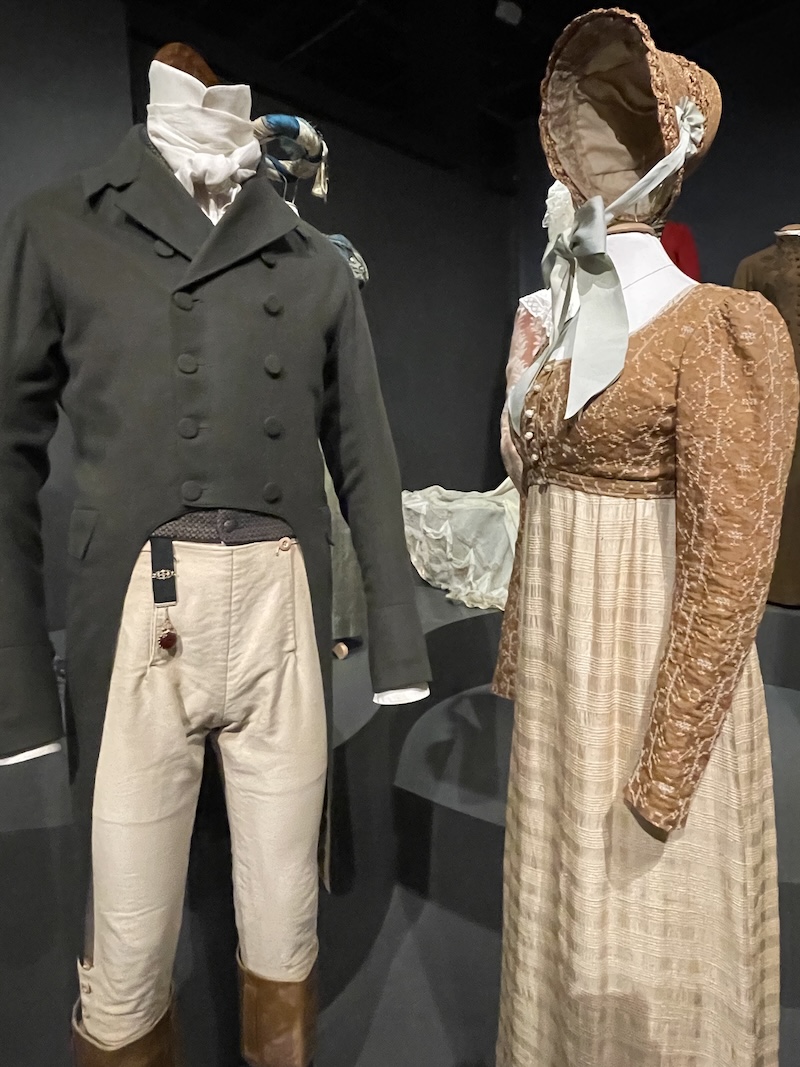
Dinah Collin’s Emmy award-winning costumes for Elizabeth Bennet and Mr Darcy in the BBC’s 1995 miniseries Pride and Prejudice.
When a costume’s journey on film is finished, it waits. If the costume’s designers are recognized for their work or if the costume becomes iconic in defining a character, that costume will find its way into the permanent archive at Cosprop and form part of exhibitions. Many costumes enter a storage area where they can be rented and even remade to play new parts. Some will become study pieces. And yes, even truly historical garments will at times be used and incorporated into a garment to be worn today.
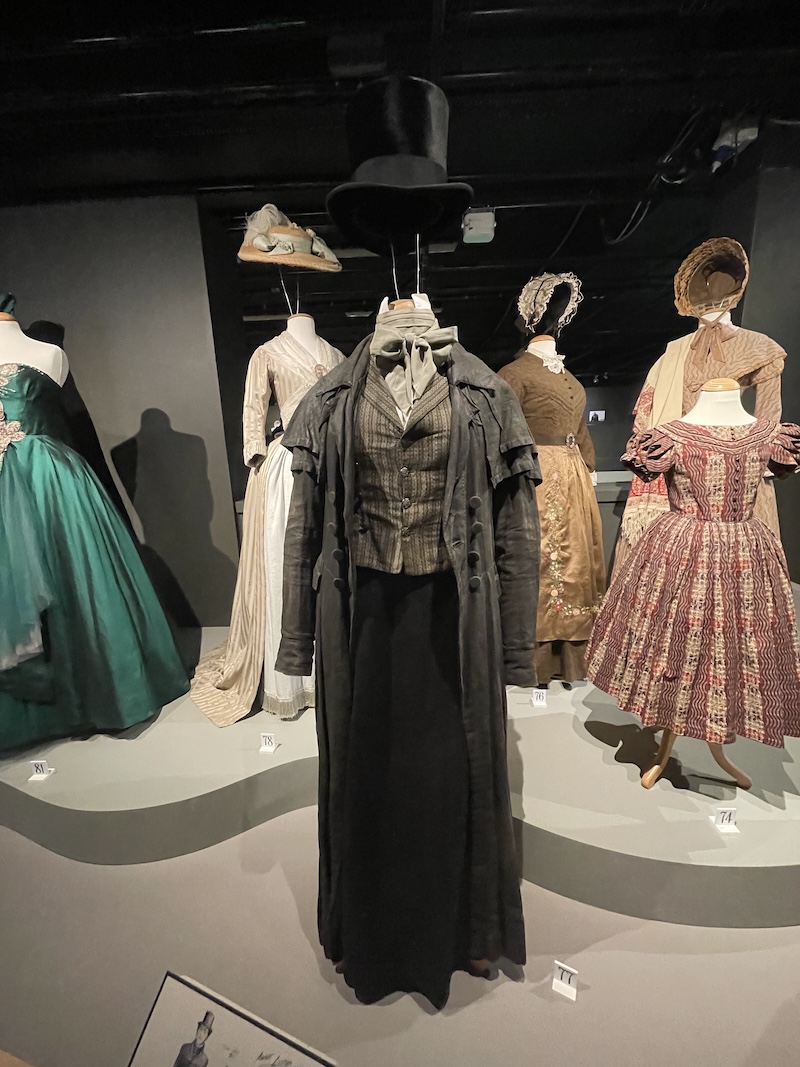
Tom Pye’s costume for Suranne Jones as Gentleman Jack in the foreground with O’Connor’s Jane Eyre costumes on the right and Jenny Beavan’s costume for Lesley Manville as Mrs Harris who indeed went to Paris on the left.
What’s most important at Cosprop is giving designers, makers, and actors every thread they need to be that queen, pirate, dreamer, or that feisty Yorkshire-woman striding confidently across her very own land in her black linen overcoat and top hat.
“Costume Couture: Sixty Years of Cosprop” runs at the Fashion & Textile Museum in London until March 8. But don’t despair! It opens again at Dovecot Studios in Edinburgh on July 18th and runs all the way until January 9, 2027.
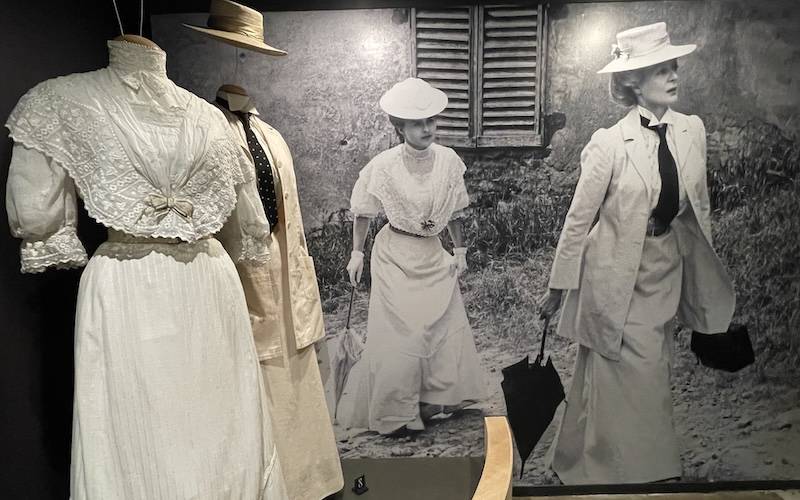
Header photo: Helena Bonham Carter and Maggie Smith wear 1906 ensembles. Costumes stand in front of a still photo from A Room With a View by Sarah Quill.
This post brought to you by the generous support of MDK Society members. Thank you! Want to join? Details here.
Come Shop With Us

Thanks for this! Such wonderful clothes!
Thank you for sharing this! I love understanding how the designers come to their final pieces for movies. It’s a joy to see the detail in these clothes.
Love these period pieces. The designers and those that recreate these beautiful designs are so talented. It would be a trip to try these on.
I bet a lot of us dream about wearing these beautiful outfits and wonder how it would have been to live in Georgian or Victorian times. The quality and craft of the pieces!! Thank you for this fun description of the collection.
Wonderful article Jeni! I recently viewed the Glen Close wardrobe exhibit — a small part of her overall collection — in Savannah. Learning about the scope what designers choose in a character’s wardrobe was fascinating. Defining the character historically correct, the exacting details, the craftsmanship, how the character’s wardrobe changes (sometimes so subtly!) as the character changes…all truly amazing. It made me pay closer attention to wardrobe in cinema and television. Of course what always catches the eye is a knitted piece. :<)
Thanks Jeni, I am sad to see that I will miss this when I’m in london in April. I stumbled into a Kaffe Fassett exhibit at this little museum when I was last in London, visiting a glass studio down the street. I archive all of your articles and really appreciate learning about these hidden gems. And I definitely count you among them!
Thanks for bringing us along. What a magnificent exhibit!