
Inspiration
Self-care express: The Commonplace Book
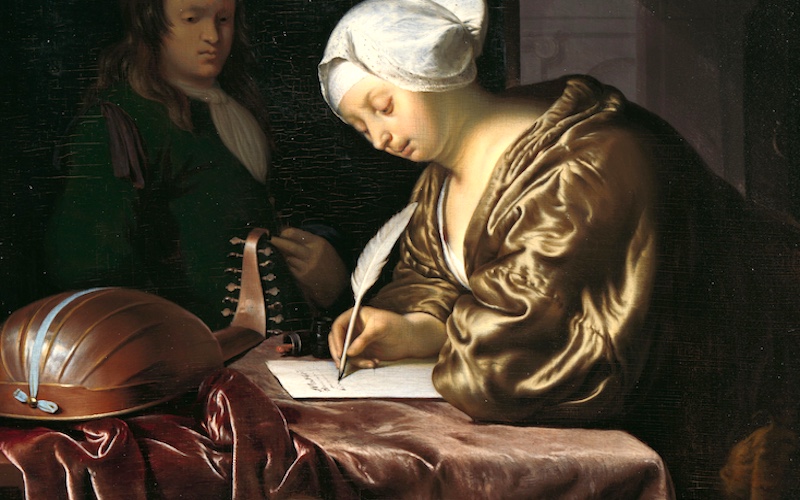

You may already know of the commonplace book. It’s been in use since antiquity, far pre-dating movable type, index cards, bullet journals, and, of course, Pinterest (a platform with some overlap in function). But I did not get interested in this small-but-mighty tool until I saw some sexy French influencer do a show-and-tell about hers on Parisian Vibe. (You don’t say, said no one.)
A (single) place for everything.
What is a commonplace book, you ask? It is not, as its name suggests, some bestselling thriller from the Little Free Library. Nor is it a journal or even necessarily a chronological project.
Its name comes from the Latin locus communis, meaning not humdrum, but a shared location for passages and quotes copied out from your purposeful reading.
The practice comes from a time when a book was a far more rare and precious object. Darwin, Linnaeus, and Mark Twain are among the best-known users, but many notable and perhaps more artful examples of the form come from non-famous gentlewomen who recorded important takeaways from their studies.
Some uses for a commonplace book.
- it’s a nice way of keeping track of your reading
- the act of making analog entries helps consolidate your learning
- if you have a flexible system, you can group by subject matter, which obviously is good for sparking new ideas and deepening your knowledge in an area
- but the opposite is also true—having unlike things together and reviewing them can also spark new ideas and unexpected connections
- a commonplace book allows you to make more use of the public library, or to declutter books with a lower density of takeaways. Just copy and preserve the material of highest value to you! (Obviously I am not suggesting you apply this method to every book in your collection—you will always have many keepers.)
- but say you have a large number of self-help books, a genre known for being 82% too long. (Not my book of course!) Just go in there and grab that 18%, the core of wisdom.
- and it goes without saying that the commonplace book would make an excellent repository for your collected self/care knowledge: the Basics! Your Emergency Kit!
What to use.
There really aren’t any hard rules here. I like a standard Midori MD lined A5 notebook with its heavier horizontal line on each page—gives a nice subsection. Or get something without lines if you like to include drawings and other embellishments. The Leuchtturm 1917 (which you can get here in some new and fabulous colors) is a good pick, as it comes printed with page numbers and includes an index for you to populate. You could also find a small three-ring binder or some other system that would allow you to group pages as you see fit.
One thing’s for sure: if you’re a reader and a learner, you’ll fill your commonplace book quickly, and it will be something you treasure.
I am keen to know how many of you have you already been using a commonplace book. If you have, please tell us in the comments below what you’ve noticed about the practice. What do you like about it, and what are its challenges? Has it changed your reading? The quality of your learning? And if you haven’t been using one, do you plan to?
Image credit: The Letter Writer, ‘F. van Mieris fecit Anno 1680,’ Rijksmuseum. Used with permission.

I have quotes and such in mine, also topics or ideas I want to study more deeply or random things to look up later. I definitely prefer A5 size. My favorites are from Peter Pauper Press, they have dozens of beautiful designs and the paper doesn’t bleed through. I also have two A5 binders, one for work and one for home, for brain dumps and to-do lists. Those are more like a bullet journal, but not exactly.
Oh my goodness! Peter Pauper Press is amazing!! Thank you 🙂
I use whatever scrap paper is handy. It then clutters up the space until I want to refer to it – never to be found – in spite of pulling everything apart looking. And then there are the almost unused journals/notebooks sitting on the shelf.
Get some glue sticks and glue those scraps into a journal.
My hubby is a list-maker. I’m constantly finding scraps of paper with list of random things (movies, books, sports stuff, etc) on them.
Haha, yes! I use this method as well 🙂
I have a section in my Bujo just for quotes, words that spark a response in me. There isn’t any organization to them other than the subtle chronology of one after the other – beginning with the first one of 2025 and closing with the final one. Which I suppose provides its one reference point for reflection on the year.
I began an index card file in college with quotes and phrases etc. easy to sort and categorize. Probably should dust it off and begin adding again! I didn’t know it had a name!
There’s a whole thing around index cards that’s gotten a lot of interest in recent years called ‘zettelkasten.’ I’ve not even scratched the surface, but it looks worthwhile.
As a lover of all things stationary; journals, stickers, cards, good pens, I have quite a collection of these in my home.
I’m also a voracious reader and copy out text I want to remember all the time. I have them on library cards, index cards, in skinny journals, all over my house !
Maybe I’ll focus on a universal notebook to compile them in for 2026. It’s nice to find others, like knitting, that enjoy the same practices as I do! So glad to learn it has a name!
I use a BUJO for everything – my to-do lists, my reading record, theological reflections complete with personal art, quotes, books to read, goals, fitness records. All this is just chronological with no organization. That might be the Achilles heel of my commonplace books. Maybe I should look into clever ways of sorting the stuff.
In the Notes on my phone. And take a picture of any section I want to remember or share with friends. I have a commonplace book too, but it’s never nearby when I need it. And old ones have gone to thumb drive never to be seen again when computers died. Regrettably.
I actually keep this type of thing in my notes app on my phone iPhone, which fortunately syncs to my iPad.
What i like is you can sort them, add pictures to the notes, and if you are feeling incredibly lazy, dictate them. You can also share them.
Some of my note topics are:
Medications and list of doctors
Books to read
Books read (with a grade)
Inappropriate curses (i.e., may you come back as a cat in Korea)
Sibs and kids (6 siblings, 24 nieces/nephews and a plethora of greats …. this also includes birthdays, anniversaries and sadly, passings)
Plus you can password protect each individual notes.
Wait, say more! Is it a curse in Korea? Or is it, may you come back as a Korean cat, specifically?? Fascinated by this…
Yes, on my iPhone. My quotes file in Notes dates back to my first an iPhone 4 in 2010. I copied handwritten quotes into the file from old notebooks and old photos of BlackBerry notes I kept since the early 1990s. This is so much easier to search!
You topics in your notebook are great and sparked ideas for me.
The thing that I’d like to quibble with is that someone who’s dictating is lazy – as someone who’s recovering from hand surgery, I love the dictating feature of my iPhone. Also, I can talk faster than I type so dictating again can be a home run for me.
My handwriting also blows, so dictating is extra wonderful from that regard.
I’ve never been much of a journaler but this sounds right up my alley! I’ll give it a try in 2026
Old school here. I created my own tiny notebook for quotes and inspirational thoughts in the 1960s after reading. A Pocketful of Proverbs by Joan Walsh Anglund. She was best known for her iconic illustrations of little children with expressive eyes. Something that perhaps the Precious Moments artist may have unconsciously used for inspiration.
I still have that first tiny notebook and have created others through the years, although in the last decade, I utilized commercially created ones to record events from grandchildren, knitting and weaving patterns, and a host of memories.
I remember that one! I loved Joan Walsh Anglund illustrations as a kid but forgot about them until now. Thanks for the reminder!
Me, too! I create new ones, mostly paper, as needed and occasionally reread them, sparking many memories.
A gift for my friends and for me!
Since 1983, I have kept a list of titles and authors that I read. I enter each book as I complete reading it. I use a yellow narrow Rhodia pad to record the titles.
Every ten titles, I note the new total. During my active career years, I managed to reach my goal of 100 titles annually. Now, in retirement, it is at least 120. I am there for 2025!
I have kept one for years after cleaning out my desk at work and finding thousands of loose Post It notes stuck together with quotes, books to look up, and sudden, short inspirations and connections from reading. To catch up. I placed a post it on the left hand page of a fresh journal and reflected on what the scribble was / (might have been) about and I keep a second journal for current place-keeping – instead of found Post Its, I try to illustrate what I want to record on the left hand page and write about the drawing / photo / cut out picture etc., on the right hand page. Wonderful to look back on occasionally, but dangerous as this could start a THIRD commonplace book. 🙂
Ha…I didn’t know there was a name for what I did. I have been making commonplace books for many years now. The act of writing things I have learned, in a journal, helps me to absorb what it is I am reading. Sometimes I copy what I have read, the important or interesting parts, and sometimes I try to rewrite in my own words. I also have many collections of poems,sutras,songs and quotes that I love. Recently I have been creating a book with mixed media collages, drawings and paintings inspired by the words. It’s been a fun and creative way of saving the words that are so meaningful to me. Thank you for this post.
My father kept a commonplace book, and it was a lovely way to remember him after he passed away. So many quotes made us (his children) remember the things he held important and that he tried to teach us.
I have sticky notes EVERYWHERE with quotes and notes. Usually I put them on a bulletin board- a Commonplace book sounds delightful. I think I’ll try this! Thank you, as always, for your wonderful ideas.
I’ve been doing this for years – I just didn’t know it had a name. When I look back at some of t he early ones, I see how much I have accomplished and what I did that I didn’t think I could do.
I appreciate this article very much as it has given me new ideas as to this process.
I use my iPhone. The books section. I enter excerpts, documents, comments diagrams, photos etc. I file, add category and label each. Easily retrieved.
I use Readwise sort of the same way. It’s an app that keeps track of your kindle highlights and stores them for you. Then every day it sends you five random highlights from all your reading, in an email. You can also look at all your highlights from one book, to review the book quickly.
I’m not opposed to analog journals, though: I have two handwritten ones as well in ordinary sketchbooks going at all times. One of these is a bullet journal with drawings in it, and the other holds my Morning Pages, three pages of handwritten stuff for every day. The Readwise app is just really useful for keeping track of your reading. I don’t have room for any more books so the Kindle is very useful to me.
I began keeping such a book after finding “books” my Mother had kept during 15 years of RV travel before my Father died. Funny notes about where they were and domino scores etc. they were a blessing to all of us!!! I found a little spiral and placed a few tabs. One for what I found reading…book title and author and any great quotes. A tab for notes during knitting zoom classes etc. the front is filled with jots as I drink my coffee and plan my day. Maybe it will someday be found and enjoyed. It certainly keeps me focused and I go back to my notes often.
Giving my granddaughter a book to begin keeping a list of books she reads.
Happy book keeping!!
For more than 3 decades I’ve kept a collection of index cards with quotes that “spoke” to me. I periodically flip through them to admire how someone else can say so beautifully what I’ve been thinking or feeling. Fiftyyears ago I was lucky enough to find a copy of Elber Hubbards Scrapbook at a yard sale near the Washington Cathedral. It’s a collection of all the quotes and excepts that appealed to him, printed on and bound with handmade paper secured with cotton ribbon. A treasure.
I have been keeping commonplace books since I was a teenager many many many years ago before I knew there was a name for it. It has been a way to hang on to word-nuggets from my reading that I wanted to hang on to long after the book covers were closed. I have many handwritten notebooks, but nowadays I also copy and paste to a folder in my laptop and enjoy picking an appropriate font and size for the quote. Going through my commonplace books brings back the joy and satisfaction of finding those quotes.
I do have a bound book of my knitted creations that list all the basics of the item created. It allows me to go back and learn from a project.
I have a Commonplace Book – a dollar store find (they have lovely notebooks at Dollarama in Canada… most of the time). I refer to it every once in a while to add to it or to re-read things to make me feel better. It’s one of many notebooks have that serve many purposes, but that one is special.
I’ve had a commonplace book for 4o years without knowing that it had an official name…someone gave me a beautiful journal and I thought it would be a nice place to write down the quotes and inspirational messages I had been collecting on odd pieces of paper. I still collect them on scraps of paper and on my phone and then periodically add them to that journal. I have several other journals and notebooks for different categories of things I like to keep up with. It’s fun to see these comments showing how everyone organizes their journals in the way that works best for them!
This is something I started doing as a teenager in the 1970s but I stopped doing it when I bought my first kindle which has a part that saves everything u ever highlighted in a section you can then go back and review. I am older now and back to reading some paper books ao I love the idea of finding my old common place book(which I just called my favorite quotes book) out again and restarting it. I do love the idea of writing it by hand and my children finding it when they have to dispose of my stuff some day as I would have loved to come upon something like this from my own mother or father.
I started a “Books Read” book in 2025. I have included some YouTube videos that I took notes on to help remember what I learned. For the fiction books I write a quick blurb on what it was about, or if it was a good read, a longer blurb for those books I learned a lot from. For non-fiction I may write an outline of what I am learning as I go along. Since I am doing this as I read, they are arranged by the month I read them. Not the most efficient for finding things later!
I’ve cut out and written out quotes and kept them on bulletin boards, and eventually they’ve gone into a file folder. I’m inspired now to have a book of quotes! Thanks!
The commonplace book sounds like a great idea. I’ve been reading a lot of books lately that are filled with things I want to remember. Most of the passages in the current book I’m reading are way too long to copy, but I could make a not about the subject and where to find it in the book. Thank you for a really neat idea.
This is precisely the post I needed to read today. Thank you!
I’ve been using a commonplace book for several years. It grew out of my practice of gathering quotes in my calendar each day, then I started accumulating them at the end of the year in an MDK journal (the Leuchtturm 1917).
I learned the term commonplace book just recently while reading Madeleine L’Engle’s Walking on Water (an excellent book about being an artist). Until then, I didn’t know there was a term for it! I love keeping a commonplace book and being able to find my favorite quotes and bits of wisdom. Like you, Max, it’s made me more able to part with books that I probably won’t refer to again but I want to retain the best parts of.
I just love how many ppl were doing this before they knew anybody else was doing it, or that someone had given it a name!
I wish I had known about this a long time ago and I probably have heard of it before but just did not recognize the full extent of its usefulness. I think I will give it a try for the new year.
Great ideas. I have used index cards for years, ever since I was in college. How I never thought to organize quotes for myself is unbelievable. thanks for all the great ideas.
I have several, which makes them less helpful. I need to consolidate. I’m recuperating from hip surgery and I’ll be on my butt for a lot of the next month- I think you’ve inspired a project, assuming I can find all of the commonplace books I’ve started.
a box of 3×5 index cards is my book; I use it most when I need bucking-up or a cheering-up.
While in college, I started a commonplace book. Mine was pre-titled “the Nothing Book.” Of course it wasn’t, but was a great name so I thought. I haven’t looked at it for many years. Time to dust it off, finish filling it and start another in the many, many empty books I have collected in the years since.
One of my most cherished possessions is my mother’s 3 inch thick book filled with quotes, her poetry and treasures. One treasure is the tip of a fir sent by her true love in a letter when he revisited a place they had hiked. Also tucked in the pages is a letter from her spiritual mentor consoling her after the true love pressured him to marry a family friend. There are poems in the book that she wrote about that love a decade later, after she married my father. While she had told me about this love, I did not know the depth of her longing until I inherited her “commonplace book,” her heart record.
No one may read this as it’s been two weeks since this snippet posted, but here goes. I belong to a wildly diverse, lovely knit group, but until mid-summer I did not attend regularly so I missed the holiday season last year and did not know the gift protocol. We meet on Tuesdays and Saturdays. People brought gifts the day after this article posted…I had nothing. In the middle of the night I was inspired by Max’s column, went on Amazon (sorry, Ann and Kay MDK shipping times weren’t conducive) and found a pack of notebooks in bright colors (so they would be easy to find) and pen clips (small paper clip-type thingies that clip to your notebook and hold the pen that is never handy otherwise), made copies of Max’s column along with an explanatory note (no surprise there) and selected colors for each member based on the colors they wore and/or knit with. I came armed for the Saturday gathering. Everyone was delighted and I have received followup comments since then. I will be expanding this package in the future with adhesive tabs. While I included pen clips, I did not go down the slippery slope of selecting writing utensils – I am a Bic Crystal 1.6 mm gal which is the antithesis of most journalers. All in all, a rousing success which will be repeated for future purposes! Thank you, Max!
Oh Barbara! What a good friend you are. I love that you are already thinking about expansion packs <3
I’ve never heard about this, but what a fun concept. Would be a good way to keep tips and tricks in one place instead of searching through email newsletters to find the article. There are so many of these “old-fashioned” practices that were so sensible and somehow fell out of favor or were lost to time.