
Techniques
Get Your Seam On: Part One
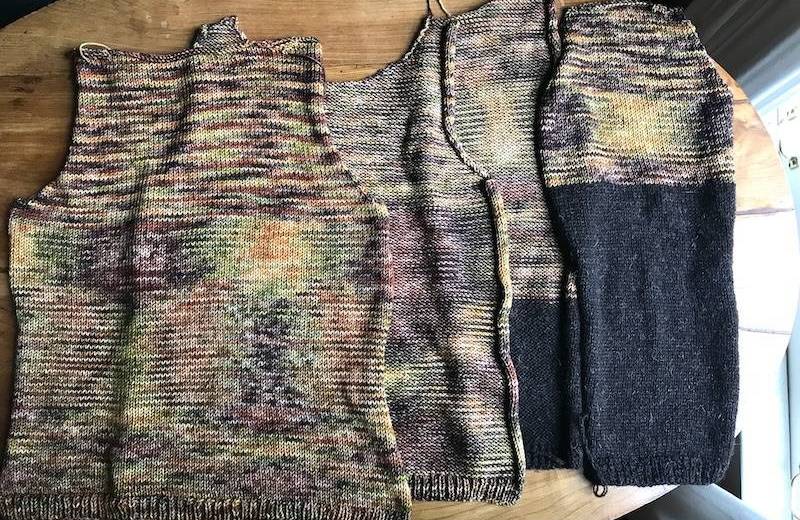
Now that you’re feeling more confident about seaming knitted fabrics (Part 1 and Part 2), it’s time to think about making a seamed garment. I’m a big fan of them, as you’ve got more flexibility in style, more sophistication in fit, and a better chance of the garment holding up over time.
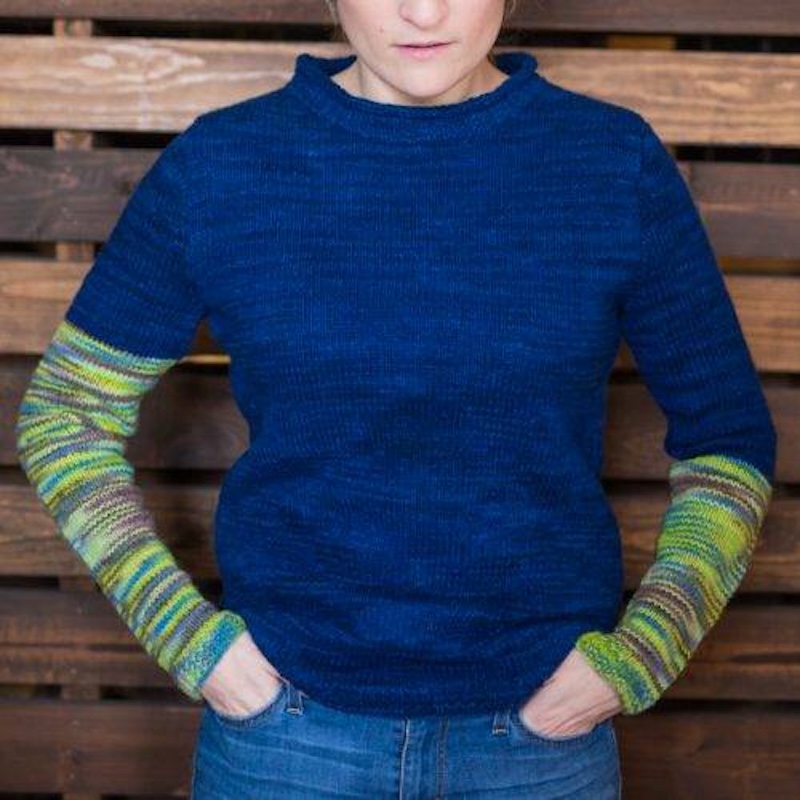
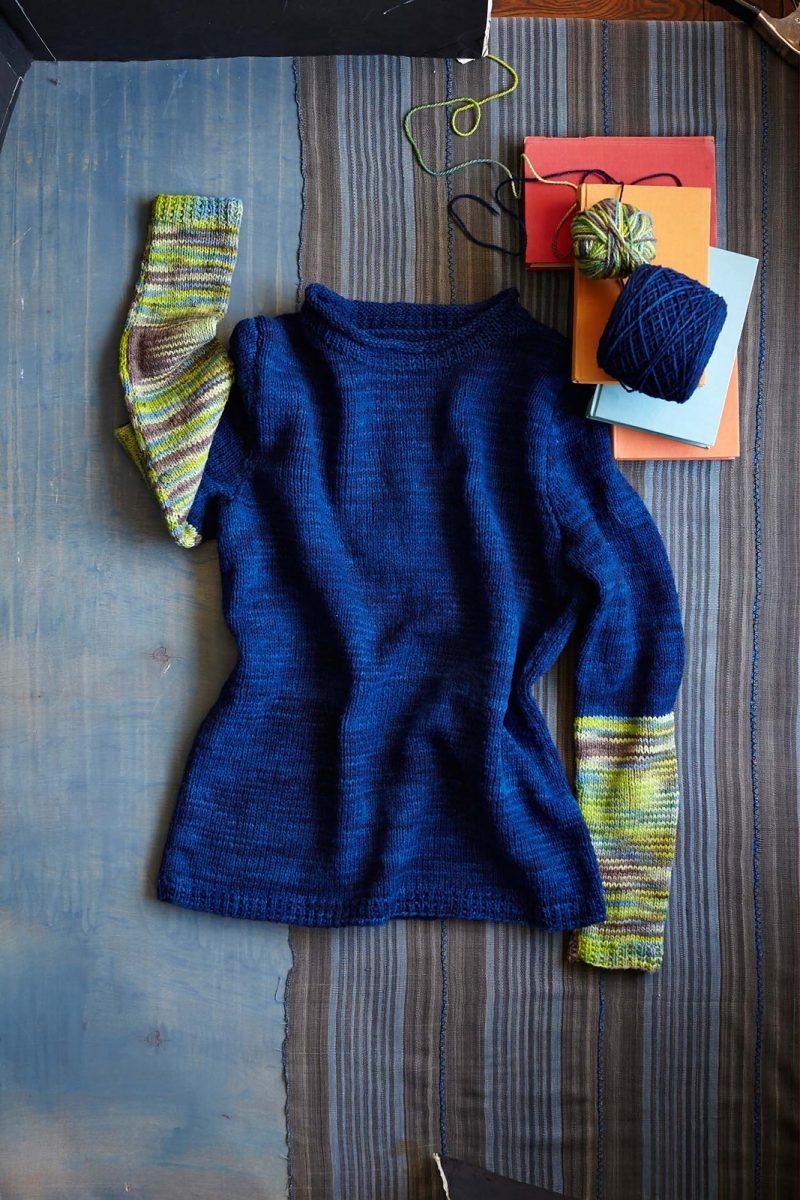
One of our favorite seamed garments is THE EASEL SWEATER. Ann has knit four (!) of them.
On style: Most seamless garments are worked with raglan or circular yoke shaping, and those styles don’t work for everyone in every situation.
On sophistication of fit: most seamless garments are constructed symmetrically, with the same amount of shaping on front and back, and on the sleeves. That works well if your body is symmetrical, but many of us are larger at the front than the back—you might have a bustline, or a belly— or your arms might be larger or smaller than average for someone of your general body dimensions.
Which means these “all in one” shapes end up having to be worn sized to fit our largest area, which means they can be too big on less large areas. Seamed garments, with the various pieces worked separately, can more easily accommodate bodies that need different fits in different areas.
On wear: seams in a garment add reinforcement and structure, to stop the garment stretching or sagging.
Five points to consider when choosing a pattern:
1. Make what you know and wear and love.
You can’t try a garment on before you make it, so you need to use your existing wardrobe as a guide for what to choose. Look the key details of your favorite garments: do you prefer drop-shoulder, a raglan, or a set-in sleeve, for example. And then measure them.
Use that information to guide your size choice. Note that when measuring, look at the heavier weight fabrics, including fleece tops, not just very fine-gauge machine-made sweaters.
2. Don’t be one of the first to knit a pattern.
The fabulous thing about social media is that you can see pictures of people’s finished projects. Before you commit to a project, it’s good to get a sense of how a particular looks worked in different sizes, in different yarn colorings, etc. Wait until there’s a bunch of finished projects for you to look at, on a variety of different people.
3. Spend time looking at all the pictures.
This might sound like a really obvious point, but it’s easy to forget in the excitement about a new project. Closely examine all the photos in the pattern, and in the finished projects.
It’s easy to fall in love with something because the patterning is glorious, or you love the color choices, or it looks terrific on the model, etc. Pattern pictures are designed to make you fall in love! Enjoy them, and then take a second look.
Is the garment the style/structure you’re looking to make? Does it work on bodies of your proportions? That is, if it’s shown modelled on a body with a modest bust and you’re more curvy, then it’s not going to look the same on your body. It doesn’t mean it will be bad or wrong on you, just that it will look different on your body than it does on the models. Spend time with the details.
4. Never knit a pattern that doesn’t have a schematic, and ideally one you can see before you purchase it!
The garment schematic—a detailed sketch or illustration of the garment shape, marked with all the key measurements—is part of your decision process, too. It can answer questions that might not be clear from the photos, showing more details of the garment structure and shape, and giving the dimensions in detail.
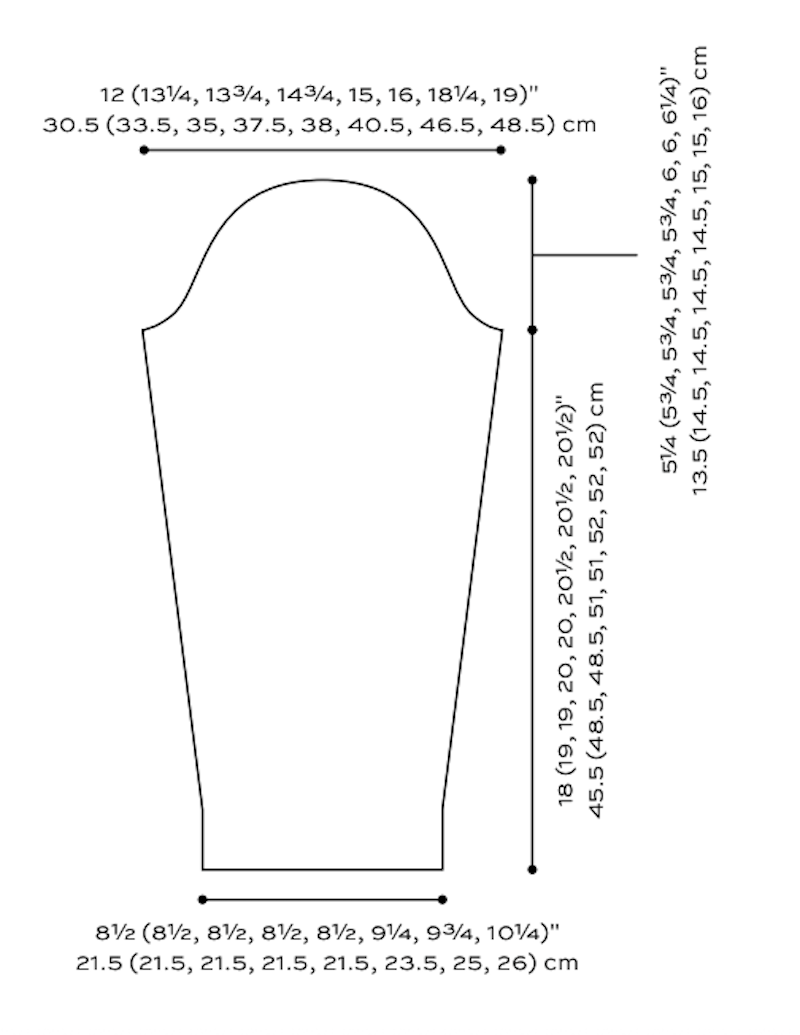
The Easel sleeve schematic.
Knitting a sweater from a pattern that doesn’t have a schematic is like buying clothes based only on how they look in the pictures on the website. You’re not likely to be the same height as the model, so you’re just not going to know how long the sleeves will be on you. The schematic answers that question!
5. Deciding which size to make.
If there’s a recommendation on how to choose the size, follow that. Or click here for an MDK column on finding your size.
If you are knitting for a body that has a bust or a belly, always start with the circumference at your underarm, and add the suggested ease to that. If you are making a garment for a body with a larger-than-average bust, choosing the size based only on your full bust circumference can result in a sweater that’s too big in the shoulders, neckline, and upper arms.
Compare the finished measurements of your chosen size to the sweaters in your wardrobe.
You can virtually try the garment on: hold the tape measure around your torso, at the chest/bust/body circumference of the sweater, and see how it looks relative to key circumferences: at your underarm, your full bust, your waist, your belly, your hips.
Specifically, if you’re fitting to a body with a bust, you actually don’t want a lot of positive ease at the fullest circumference, as it can make the garment look saggy. As long as it clears “the girls,” you’ll be fine!
In the next couple of columns I’ll be sharing more tips to help you on your journey.
Come shop our end-of-year sale! Up to 85% savings on yarns, bags, books, notions—treat yourself, find a gift, have fun with this.
Come Shop With Us

I prefer to knit garments in pieces for all the reasons you have explained. But…the popularity of seamless garments is making it challenging to find interesting seamed garments. I have found it hard to find even a basic set in sleeve pattern for different gauges that I could use as a template – let alone one with stylish details! I would love it if you could share a list of seamed patterns and/or designers who prefer to design them.
I also like seamed/bottom up garments and have been knitting them exclusively for years. Have only knitted one top down sweater. I am a Rowan Magazine lover and there are tons of beautiful seamed patterns. Most of them all have great schematics, too. Favorite knitwear designers have been Kim Hargreaves, Martin Storey, Lisa Richardson and Kaffe Fassett. Most all of the patterns are knitted in pieces. Digging into the past, a couple of great designers are/were Annabel Fox and Patricia Roberts.
In the UK King Cole and Sirdar do several seamed bottom up sweaters and cardigans. KC in particular do basic cardigan and sweater patterns in DK and 4 ply which I often adapt by adding cable or textured panels. West Yorkshire Spinners also do seamed patterns.
I too much prefer seamed patterns for all the reasons Kate listed plus as someone who knits in the Northern English throwing style with the right needle held under my arm, I find knitting with circular needles much slower and more wrist aching!
And can I add a plea for designers always to include a schematic which also seems to be much rarer these days!
I agree. The Knitter’s Handy Book of Sweater Patterns, by Ann Budd, gives basic patterns for various gauges of yarn in many finished sizes, with several styles of necklines and sleeves. Very useful! My only caveat: Maybe because the patterns can be used to knit either women’s or men’s sweaters, the upper sleeves come out a little wider than I’d like them for myself.
I also use a 40-year-old Bernat booklet that includes a basic pullover pattern (bottom up, in pieces) with set-in sleeves in worsted and sport weight yarns. I’m glad I kept that!
I agree with this, so fortunately I have an entire collection of Vogue Knitting magazines from the 80s on, with a gajillion seamed patterns that remain stylish. I grew up with only seamed sweaters. Rowan magazines have lots of seamed sweaters too.
Thanks this is very helpful info! I appreciate anything having to do with getting a good fit.
I would add to examining the photo, read the notes (when people have taken the time to write them), they can be a wealth of knowledge.
100% agreed! Also make your own notes as you go along. Future you will thank you for it.
I always love the MDK Posts, but this one, for me, was particularly helpful. I look forward to the next one on this topic. Or, if you can point me in the direction of other resources regarding fit. I am in the category of a very large bust.
Thanks!
Thanks for this, Kate. I have so many students who are afraid of a seamed garment. A great fit might be the impetus!
Thank you ever so much for the 5 points to refer to when choosing a pattern. Too many times I see, buy, and end up NOT liking it when I’ve viewed other samples and /or purchased the yarn only to realize that none of the sizes work for me!!
This is a great way to end and begin another year of knitting.
Happy New Year!
Great article, Kate! Thank you.
I am looking forward to trying a seamed garment. I’m with Sue, would love a list of suggested patterns from those of you have braved the trail!!
Oh yes. Let’s bring seamed garments back in style.
I know a dropped shoulder is considered more modern, but on my body it is so frumpy.
Thanks for the reminder of the easel sweater pattern.
Yes to seams! I find this is especially true for sweaters in drapier fabrics for anything beyond the smallest sizes. When your entire garment is smaller, of course there’s less weight to drag the entire thing south. For those of us more generously sized, more total yarn weight = more drag, especially if that garment happens to be superwash.
While I love that top-down seamless patterns have encouraged newer knitters to knit sweaters (the world needs more sweater knitters!), I’m sad that more designers aren’t designing seamed garments these days. I cling to all my Amy Herzog designs for the lovely lines only seams can give a garment. I’m ancient, so I learned to sew the same time in life I learned to knit, and seams haven’t ever intimidated me.
I too prefer to make seamed sweaters, but finding current stylish patterns is hard. In my queue,though, is https://www.ravelry.com/patterns/library/gardenaire by Norah Gaughan which she designed first as a seamed pullover and then developed as a top down seamless sweater.
For measuring ourselves: does ‘underarm measurement’ mean the same as ‘high bust’ or ‘full bust’ measurement?
I was very slow to try top-down, but I’ve grown fond of them. You can have some structure with top down. There are some lovely examples: I’m thinking of Tabouli (an MDK sweater!) as an example, with its highly structured saddle shoulder from which the top-down front and back are built. Also Kraemer’s Don’t Ask with its shaped shoulders…
But summer tanks with continuous front and back (provisional stitches), shaped only by short rows and inc/dec can be dreadfully impractical when yarn stretches and underarms grow. I’ve had to cut, tink, then use a nice stable 3 needle bind off in one case.
The numbered cautions, 1 through 5, are invaluable and on point. Despite what you may have heard, Dear Knitter, pictures can and do lie. Indeed, look at all photos of a garment with a very critical eye, and, use that same eye to peruse the schematic.
Dear Kate,
Thank you for your enthusiasm for seamed garments.The fit around the neck and shoulders is so much better than top down knits. Sadly, it is becoming increasingly difficult to find a good pattern for a bottom up, seamed sweater. In this ocean of top down sweaters, do you have any suggestions of where to find good seamed sweater patterns please?
With thanks and best wishes for the new year from Australia,
Suzy
Thank you Kate for spreading the word that seams serve a purpose. They anchor the final garment. Knitting creates fabric, and you can’t alter it the way you can sewing a piece of cloth.
I am agog at why the seemingly entire knitting world is afraid of seaming.
Signed, won’t knit w/o a schematic. Also patterns of knitted garments need to show the entire garment full on – artsy photos are just that – pretty, but one needs to see shape, fit, etc., clearly. How the design is meant to lay on the body. Sadly this doesn’t happen even in some field guide patterns.