
Knit Hello: Virtual Workshop with Rüdiger Schlömer
By Rüdiger Schlömer
Price range: $29.00 through $38.00
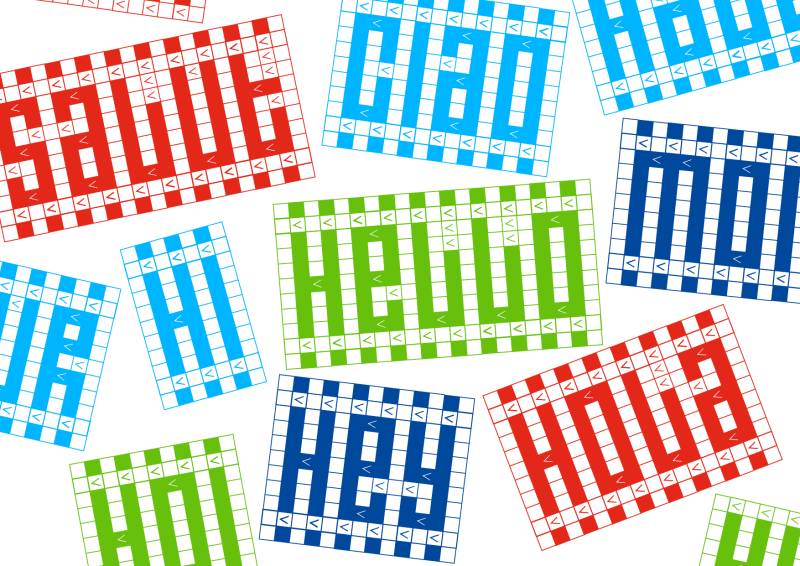
Please join us for a virtual workshop with Rüdiger Schlömer, the graphic designer who created Knit Hello, the first knittable typeface.
We’ll learn the fascinating story of Knit Hello and how it works. During the workshop, we’ll knit our own letters, words, and names.
Your order confirmation email will include a link to a PDF with the Zoom meeting link and a simple materials list.
From the drop-down menu, select one option: the workshop plus a digital download of the Knit Hello Specimanual ebook, or the workshop on its own.
Please note that you do need the Specimanual for this workshop. The workshop-only option is for those who already have the Specimanual.
Details
Date: Friday, March 6, 2026
Time: Noon-2:30 p.m. Eastern time
Location: Zoom—this is a virtual event, and it will be recorded to watch and re-watch for as long as you like.
Materials:
To knit along during the workshop, you’ll need:
—The ebook edition of the Knit Hello Specimanual. If you’ve already got it, select the class only option from the drop-down menu above. If you don’t have it, select the class + ebook option from the drop-down menu above.
—Small amounts of yarn in a single weight (we recommend worsted-weight or DK), in at least two contrasting colors—the stronger the contrast, the better. Many yarns will work well, but avoid loosely spun, halo, or single-ply yarns. Good stitch definition and high color contrast will enhance the legibility of your letters.
—Knitting needles (straight or circular) in a size compatible with knitting your yarn to a firm gauge.
Say Hello to Knit Hello

We’re wild about Swiss graphic designer Rüdiger Schlömer’s new knittable typeface: Knit Hello.
As a work of design, it’s just so dang cool. A proper typeface that is available to graphic designers for use in print and web applications, Knit Hello is unique in this incredible way: it is designed to be knit! In the Line Grid and Knit Grid versions of the font, each letter and symbol appears as a chart, ready to knit. Amazing!
With the Knit Hello Specimanual as your guide, you can knit all the letters, numbers, symbols, and accent marks—you can make up words and phrases, and knit the dictionary if you want. The Specimanual includes detailed instructions on how to make the incredibly tidy edging.
Letter math: at 3-5 minutes per letter, you can knit most names in under a half hour. No kidding—these are fast, even if you’re slow.
Once you get the Knit Hello bug, it’s the most exhilarating, addictive kind of knitting, the kind you do for the sheer joy of it. Kay knit all the placecards for a big Thanksgiving gathering—that was a good start, followed by festive holiday garlands with names and seasonal phrases. She shared the font with other knitters, who immediately set about making their own names, words, and phrases.
What We’ll Learn
In this two-and-a-half hour session, Rüdiger will set us on the path to knitted loquaciousness.
First, before knitting letters, we’ll cast on and learn how the font’s underlying framework—garter-stitch stripes and slipped-stitch edges—works.
Then, we’ll learn how to read Knit Hello’s simple charts, and how to work them. Each letter is only 7 stitches wide, and the logic is simple. Once you’ve knit the word HI or HELLO using a Knit Grid chart, you’ll understand how to knit letters from the simplified Line Grid charts that are included in the Specimanual.
By the conclusion of class, you’ll have knit HI, HELLO, and even your name! Put your other knitting on hold for a little while—you’ll be busy cranking out words! The possibilities are endless, from simple name tags to birthday banners to baby blankets.
Our Workshop Leader
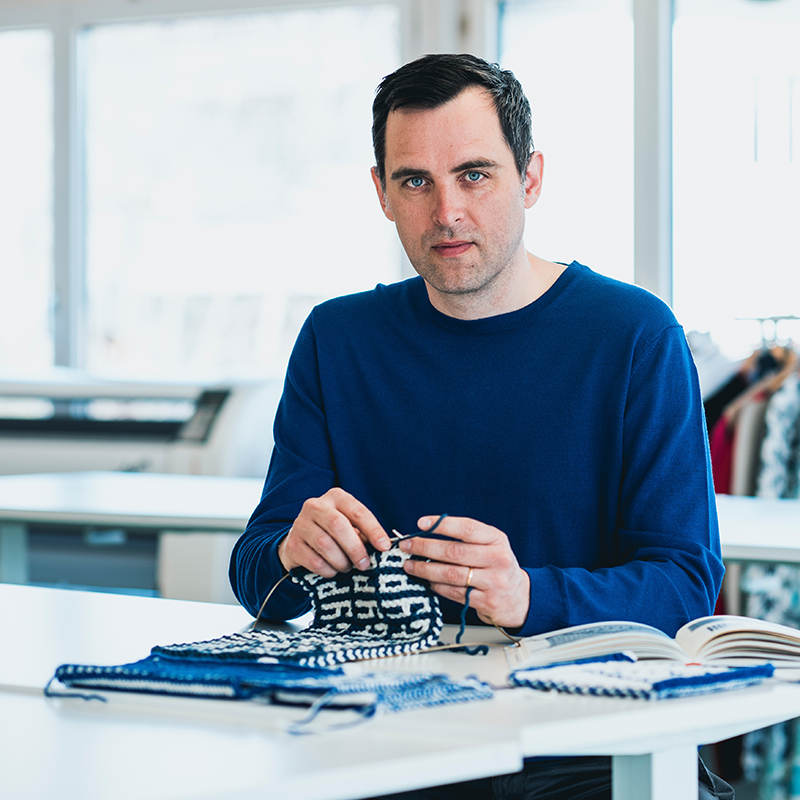
Based in Switzerland, Rüdiger Schlömer is a graphic designer, knitter and author, working in the field of exhibition design, publications and typography/type design. With Typeknitting he explores the typographic potential of hand knitting techniques. This results in knitting patterns, typefaces and a book, all empowering knitters to include messages, and graphic designers to try out needlework.
Related Products
-
Sale!

Atlas x Madelinetosh
Original price was: $18.00.$16.20Current price is: $16.20.10% off: $16.20! A joyful collaboration. Our 100% Rambouillet meets the legendary hand dyer. 24 colors, wow.
-

Atlas
$17.50Introducing the yarn we've dreamed of, finally here: 100% Rambouillet, light worsted, soft and lofty and a joy to knit.
-

Jane
$14.50Exclusively at MDK! Designed by us, made in England: the loveliest British wool, in a rich, nuanced palette. DK weight.
-
The MDK Society 2026 Membership
$99.00 / yearA year full of fun, friendship, and community—please join us.