
First Person
What Ties a Community Together
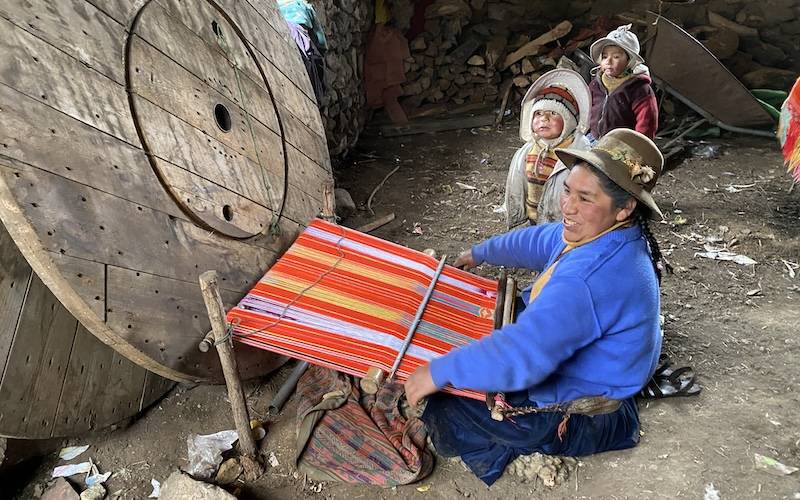
I am fascinated by the ways strings stay with us—from the moment we are cut from the physical cord of our mothers until we are draped in our Sunday best at the end of our lives, we are attached by strings both visible and not. Strings are culture and I am obsessed with the ways we keep one another warm, display our identities, and heal from trauma all using slow stitches that vary across time and place.
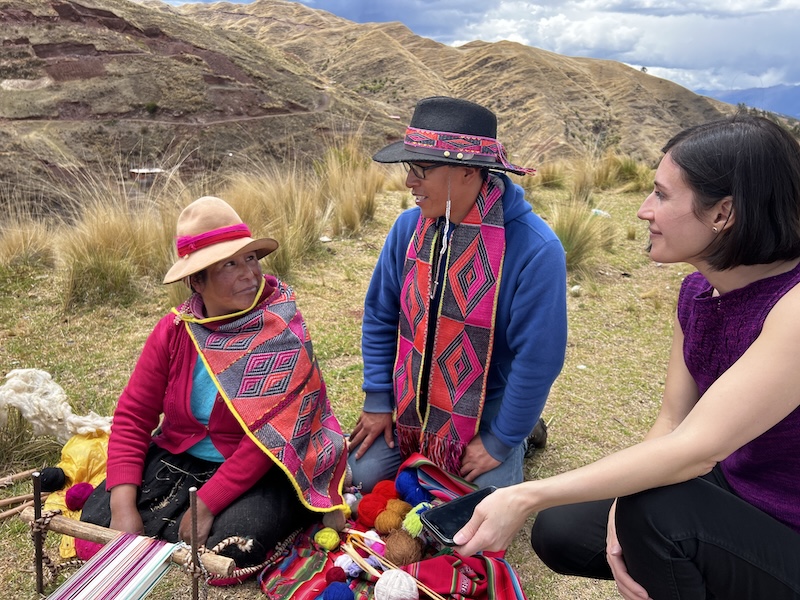
In my research, I looked specifically at the Center for Traditional Textiles in Cuzco, Peru, whose mission supports the Quechua tribe, who teach their children to spin and weave, ensuring an unbroken textile tradition for generations.
I thought about the Zuri Quilting Guild in Nashville, who create quilts for babies in the NICU with sickle cell anemia. These quilts remind the babies and their families that there are people rooting for their lives and have concern for their warmth.
The Japanese tradition of sakiori, taking old fabrics to weave them into new stronger fabrics, breathing new life into something otherwise passed, closed the life loop I was finding in threads.
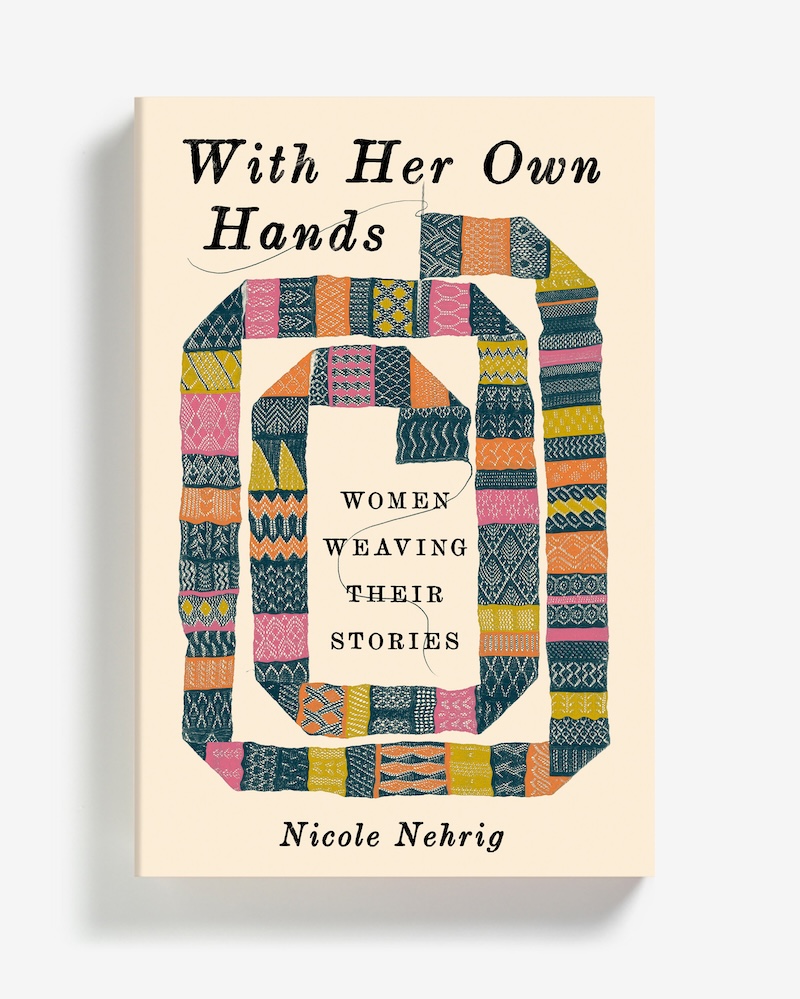
Luckily for me, Nicole Nehrig was already countless steps ahead of my mind. Nehrig, a psychologist, wrote With Her Own Hands: Women Weaving Their Stories. This work articulates more than I’ve ever thought about textiles, across time, race, class, and place, and builds the most beautiful tapestry of global womanhood. Nehrig pays respect to the physical and metaphorical manifestations of thread and the ways that single line connects all of us. This is a well-researched tome I will reach for, for many years to come.
One of my favorite sections details the social impact of textile work, of how gathering and crafting has been a great connector for generations.
“When the brain is occupied with a background task, conversations become easier, deeper and more intimate because people are less self-conscious,” Nehrig writes. A shared interest creates a sense of intimacy and provides a natural topic of conversation.
(And if you’re looking to prove this quote yourself, a little self-promotion: the MDK Shop at Atlas hosts monthly Sit ’n’ Knits in Nashville on the third Sunday of every month.)
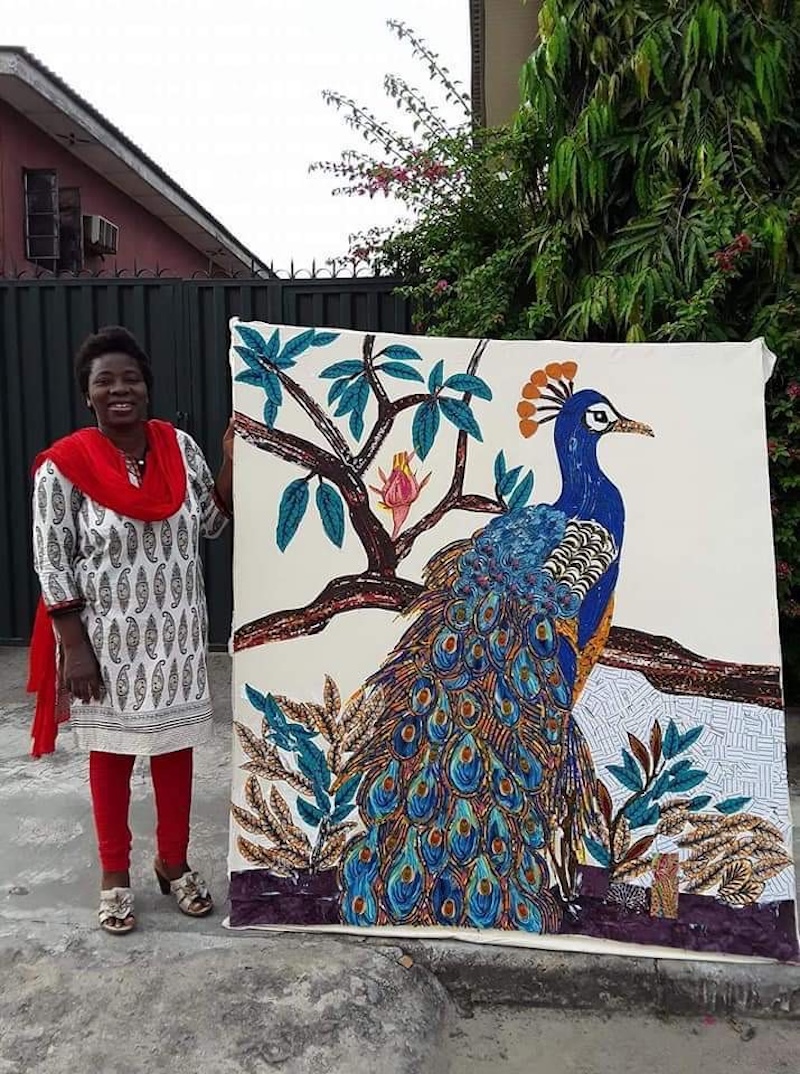
Nehrig’s empowerment of women’s work, with an emphasis on the informal nature of textile practices as reproductive labor, are used to bear witness to that labor, which would otherwise go unnoticed. Because textiles are meant to be used, they, like many other forms of reproductive labor, disappear over time. Textiles, food, care are all meant to be consumed.
In putting the focus on something so temporal, something generally not recorded, not respected, and often not celebrated, Nehrig reflects the deep importance of thread to our cultural record.
Even the act of producing this book contributes to the cultural record of textiles. By anthologizing these disparate textile practices, Nehrig emphasizes the importance of everyday craft (often overlooked by fine art) and reinforces their legitimacy in a historical context. More precisely, these reproductive skills are not to be forgotten. It is these threads that lives are built upon. These are what humanity is built upon.
All photos courtesy of Nicole Nehrig.
_________
Editors’ note: PS Going to Vogue Knitting Live? We are—come join us! We’ll be at Connolly’s, just one block from the Marriott Marquis in Times Square) from 4-6 p.m. on Friday, January 30. Let us know you’ll be there—reply here.

Nia, Thank you for starting my day in such an inspiring way ! Your beautifully written words have moved me. I have a list of things mentioned in your article that I want to pursue! Although I love knitting, I have been attempting to try weaving (Saori). But I have no confidence!! Realizing that the threads that move through my clumsy fingers connect me globally to so many inspiring humans has changed my mindset!
I’ve just ordered Nicole’s book through my local book store. Bless you for the inspiration!!!
Beautiful essay! Thank you. This is a bright spot of warmth in the Chicago area’s bitterly cold start to the day today.
I hadn’t heard about this book yet…looking forward to reading it. Thank you for your post, Nia!
“When the brain is occupied with a background task, conversations become easier, deeper and more intimate because people are less self-conscious,” Nehrig writes. A shared interest creates a sense of intimacy and provides a natural topic of conversation.
Exactly why I really enjoy the break-out rooms after the Snippits Zoom.
I’m in the midst of reading this book and it’s fabulous!
From quilting bees to sit in/knit in events in our global communities, these are the threads that bind us into humanity. Our local community, as well as many other communities recognize the need for a place away from work, in which we can join together for a joined passion.
If you don’t have a local yarn shop or quilting store, your library is a fountain of knowledge and wealth and welcomes you to sit and knit/Quilt/stitch/spin/weave.
… you meet the most amazing people when you’re looking for it least.
If your Library doesn’t host a sit and stitch, maybe you can be the beginning of that change. Just ask a librarian!
I love how many MDK authors tie the importance of textiles to who we are, as communities, cultures and people. It is so often overlooked and marginalized. Thank you all for bringing it to mind. And on these crazy cold days, it brings warmth both literally and metaphorically to so many people.
I can’t wait to read this book!
I remember standing in a castle in Scotland with my daughter many years ago. The was a blood stain on the floor from hundreds of years ago and the guide was reviewing all the history and intrigue. On the walls were huge tapestries and I remember saying to my daughter that women had made these beautiful tapestries that were visible to this day after all the politics had changed.
Love this!! Thank you so much for sharing this lovely book – it’s now on my list of books to read!
Thank you for this bit of inspiration on a below zero day! I’m off to look for the book.