
Eats
Simmer, Babe: It’s Root Ragout to the Rescue

Friends, please welcome to MDK the delightful Ellen Kanner, one of our favorite food writers. She has a long career in exploring plant-based cuisine, so we’re thrilled to have her with us, sharing the spirit and beauty of vegan food for us to enjoy.
—Ann and Kay
It’s January and your body is crying out for comfort, for coziness. I’ve heard it. What you need, lovey, is the sweet, body-supporting goodness from deep within the earth—root vegetables to the rescue.
Carrots, onions, garlic, and parsnips are among the few reliable bits of fresh produce available throughout the winter.
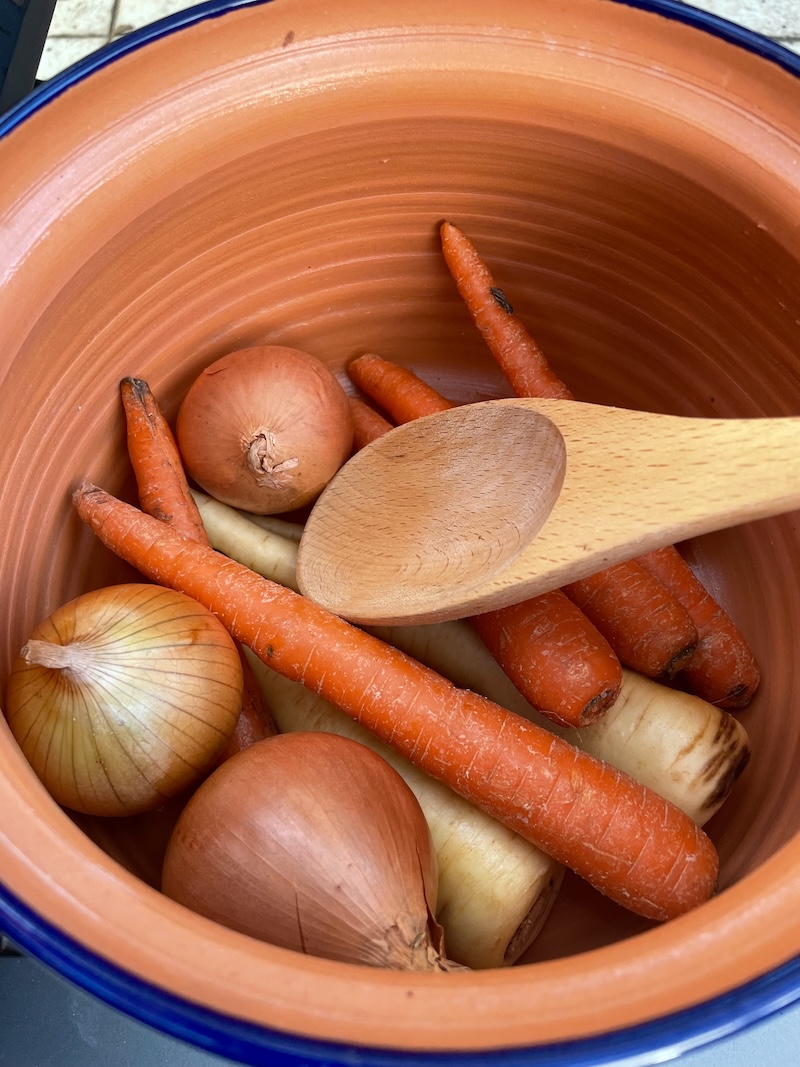
They’re also aromatics, hardworking little flavor-builders that are often the unsung heroes of complex dishes. They’ve been waiting in your kitchen for their star turn, and this root vegetable ragout is just the ticket.
What’s the difference between a stew and a ragout? Both are dishes made on the stovetop, slow simmered for tenderness and richness. The difference is attitude.
To stew means to fret, or to bung a whole bunch of things together, add some liquid, and hope it all works. Ragout, on the other hand comes from the French word regoût—to taste good again. After holiday excess, rediscovering root vegetables’ elemental flavor is like entering another dimension. Trust me on this.
Ragout is intentional without being formal or fussy, and this one’s fairly forgiving to make. Root vegetables are sturdy to cook with, nutrient dense, and anti-inflammatory without being in your face about it.
This recipe works as a comforting weeknight dinner or can pass as elegant enough for a dinner party, and can be doubled or tripled. You can make it a day or two ahead and keep it covered and refrigerated. Ragout actually improves over time.
Between active prep and unassisted cooking time, it’ll take an hour tops, which will earn you an endless chorus of Oooh, this must have taken you ages. Take the credit graciously and thank the roots later.
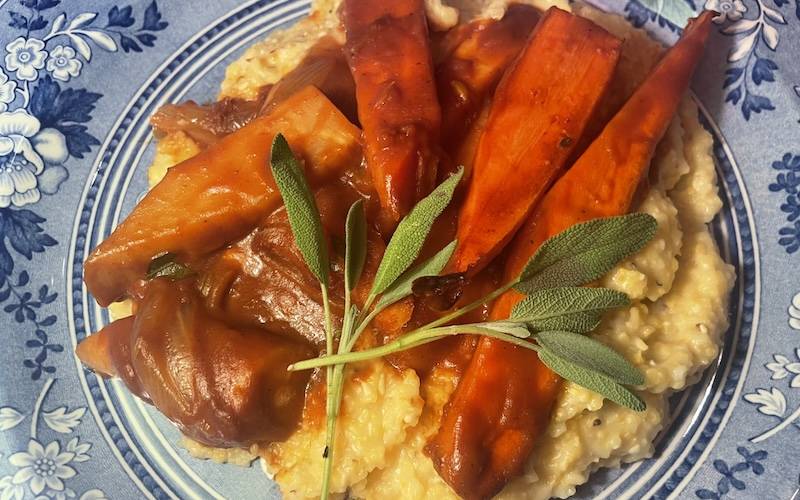
Ragout likes a little crunch for contrast. Top with a generous scattering of toasted breadcrumbs, serve a good crusty artisanal loaf, or with crispy roasted potatoes. That said, the ragout shows its softer side when served over noodles or rice or, best of all, on a pillow of polenta. Add a green vegetable or green salad and the ragout and you will be happy.
Root Vegetable Ragout
2 tablespoon olive oil
4-5 onions, sliced thin (about 4 cups)
5 garlic cloves, minced (a heaping tablespoon)
2 stout parsnips, sliced into 2-inch batons (about 2 cups)*
5 to 6 carrots, sliced into 2-inch batons (about 4 cups)
1 teaspoon fennel seeds
1 bay leaf
pinch red pepper flakes (optional but nice)
2 tablespoons unbleached all-purpose flour
2 tablespoons tomato paste
2/3 cup red wine**
2 cups vegetable broth, preferably homemade and unsalted
4 teaspoons fresh parsley, sage, rosemary, thyme, or whatever herb that makes you want to burst into song, chopped fine
sea salt and fresh ground pepper
In a large soup pot, heat the olive oil over medium-high heat until it starts to shimmer. Add all your sliced onions and stir so they’re gilded with the oil. Cook, stirring occasionally for a few minutes, letting onions soften and start to turn golden.
Stir in the minced garlic, then add the parsnips. Parsnips have an amazing flavor of warming spice, like savory gingerbread, but can be on the woody side. Give them a few minutes to cook and grow tender.
Now add the carrots, fennel seeds, bay leaf and red pepper flakes. Give everything a good stir and cook for a few minutes so the spices can release their fragrance.
Sprinkle in the flour. No need to sift, just sprinkle, and stir to combine and coat the vegetables.
Work in the tomato paste, so everything thickens slightly, then pour in the wine and broth, stir together, and bring everything to a simmer.
Cover the pot, reduce heat to medium-low, and simmer for 20-30 minutes, giving a stir once or twice to prevent sticking (and let’s face it, to get a whiff of that heady sauce). Ragout is ready when the onions have melted into the sauce, but the carrots and parsnips still have some oomph. The sauce will have reduced, so the vegetables aren’t swimming in it, just accessorized by it.
Add the finely chopped herbs, and sea salt and pepper. Fish out the bay leaf. Serve now or allow to cool, then cover and refrigerate for later.
Ragout reheats nicely on the stove over medium heat or spoon into a baking dish, cover, and bake gently at 350℉ for 25 minutes or until heated through.
Serves 4 to 6.
* Carrot and parsnip lengths are approximate, just keep them on the large side. They should cook to al dente, not all mushy.
** The wine is there for dimension and umami, not for woo-hoo. The alcohol burns off as ragout simmers. But if you’re alcohol-averse, skip the wine and sub another blob of tomato paste (about one heaping teaspoon) and an extra glug or two of broth.

Sounds delicious! Thanks for the recipe
Oooh, put it on a bed of polenta. Never thought of that. Yum.
Thank you for adding plant based recipes!
This sounds lovely. Question about batons, i thought they were skinnier. So these are supposed to be like 1 inch wide and ½ inch deep? Anyone have advice? Thanks!