
Fun
Respect the Christmas Jumper
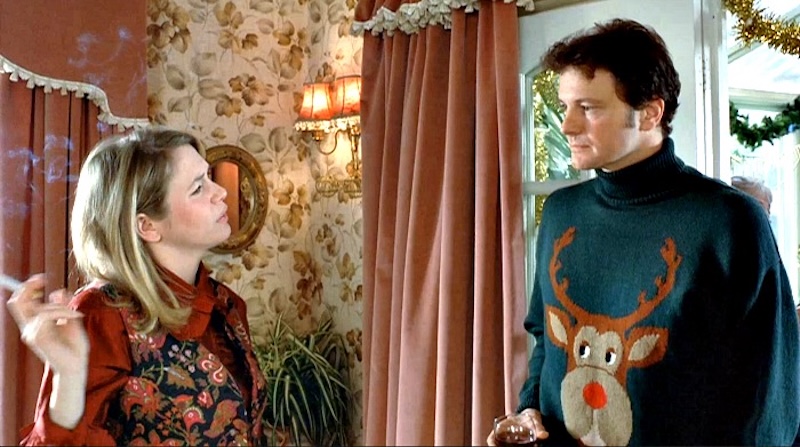

Every December, as fairy lights flicker against the dark, something begins to surface from the backs of wardrobes across Britain: the Christmas jumper. Thanks to films like Bridget Jones’ Diary (pictured above), these sweaters have crossed the pond, too.
Bright, unapologetic, and instantly cheerful, it’s the garment that can transform even the most serious of adults into someone who hums “Fairytale of New York” while reaching for the Quality Street. Once dismissed as a novelty, the Christmas jumper has quietly become an icon of contemporary knitting and it deserves to be cherished as such.
It’s easy to laugh at bad Christmas jumpers, like the ones festooned with pom-pom snowballs, flashing LEDs, or Santa surfing across the front, but humor has always been part of their charm.
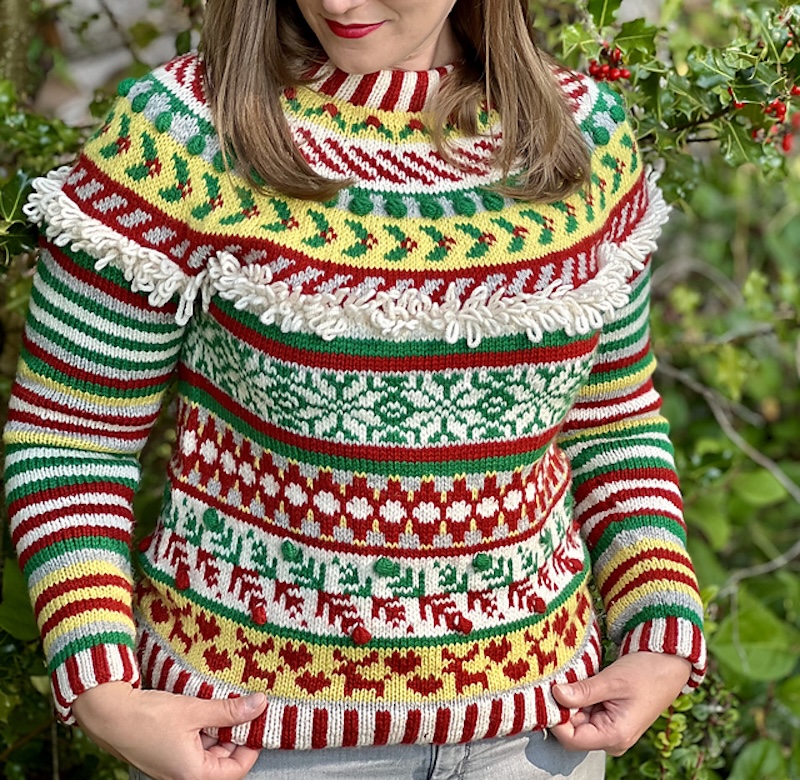
Patterns for Christmas Sweaters (some self-labeled as “ugly”) abound on Ravelry, like this Holly Jolly Jumper.
According to the British Wool Marketing Board, the earliest Christmas-themed jumpers emerged in the 20th century, inspired by traditional patterns such as snowflakes, stars, and Nordic motifs, well before television and mass production gave them their current sparkle.
By the 1980s, British and American pop culture had turned the Christmas jumper into a seasonal uniform. Stars like Gyles Brandreth and Val Doonican wore them with theatrical pride on holiday specials. Audiences followed suit, knitting or buying their own as a mark of belonging, representing a small, wearable ritual of joy.
In the decades since, the tradition has only grown bolder. There are themed office days, charity events, and social media challenges dedicated to Christmas sweaters. Yet what started as irony has slowly turned into something else, a kind of collective affection. The jumpers might make us laugh, but they also make us feel part of something: a shared silliness, a warmth that’s both literal and emotional.
And while much of this culture centers on mass production seen on the high street, just racks of synthetics and slogans, a quieter revival is happening alongside it.
Knitters around the world are reclaiming the tradition, one stitch at a time, making jumpers that celebrate slowness, skill, and sustainability.
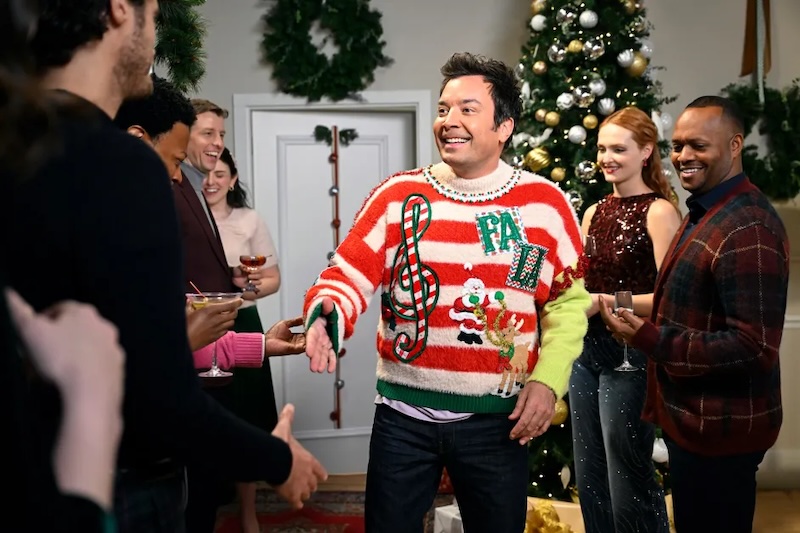
Jimmy Fallon debuted his Christmas sweater a few weeks ago.
A Christmas sweater hand-knitted in pure wool isn’t just festive; it’s a small act of resistance against fast fashion. It transforms a once throwaway symbol into something that lasts, something that carries meaning. It heartily laughs in the rosy face of throwaway culture, and the elements of Christmas that echo that. (Wrapping paper, I’m looking at you!)
Because the truth is, the Christmas jumper is one of the few modern garments that still holds space for storytelling. Every snowflake motif or stitched robin nods to generations of knitters who have turned wool into expression.
Even a personalized Christmas sweater with a name embroidered on the sleeve or a private joke worked into the pattern echoes the old idea that clothing can be both practical and profoundly personal.
Of course, like all things we love, the jumper has its contradictions. Research cited by Shirtbox suggests that millions of new jumpers are sold in the UK every year, many worn only once. The environmental impact is undeniable. Acrylic fibers shed microplastics; fast fashion fuels overproduction.
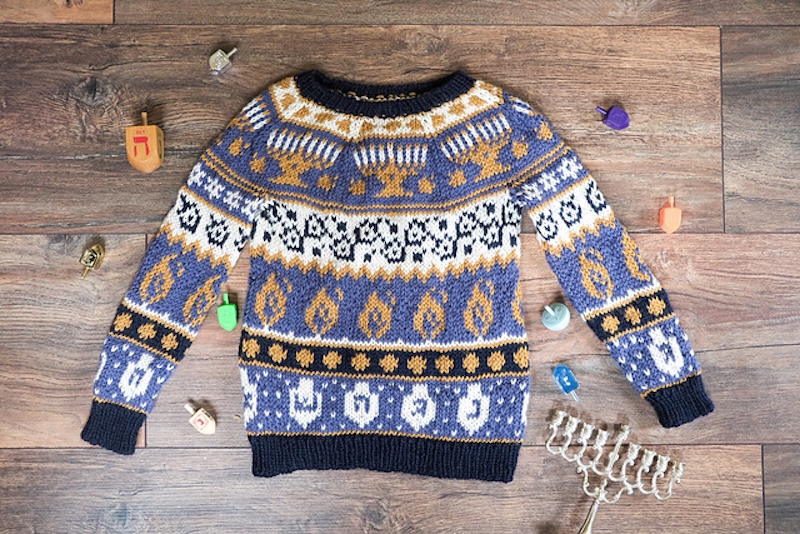
Pick the winter holiday that speaks to you, of course.
But perhaps the answer isn’t to reject the holiday jumper but to change our relationship with it. What if, instead of buying something new each year, we passed jumpers down through families, repaired loose stitches, or designed our own patterns?
What if the tradition of wearing them wasn’t about competition, but connection? If each bad Christmas jumper became a good memory as something lovingly patched and not annually replaced, we might rediscover what festive knitwear was always meant to be: a celebration of care.
There’s also something distinctly human about these garments. They don’t pretend to be chic or minimalist; they’re bright, nostalgic, and occasionally absurd. They remind us that joy doesn’t always have to be tasteful.
So, yes, we can laugh at them, and we absolutely should. We can wear the loudest one in the drawer to the office party and revel in the irony.
But we can also choose to see something deeper. The Christmas jumper is an emblem of contemporary knitting and of the joy that stitches can still bring.
When you pull one on this season, think of it not as a gimmick, but as a living artifact of our shared history: a soft, cheerful reminder that making and wearing are still, at their heart, acts of connection. The threads between us are what keep us warm.
And that, really, is the most festive thing of all.
Come Shop With Us

A few years ago, the head of the federal agency I worked for decreed we would have an ugly holiday sweater party, because he had a sweater his wife would not let him wear at home for fear it would traumatize their two small boys. It depicted Santa spit-roasting Rudolph over an open fire.
Thanks for the laugh!
OMG thank you for the evil cackle!
Sounds like USDA to me!
LOL!!
Going to a gathering tonight with ugly Christmas sweater fashion encouraged!
Beautifully-written column-I am now encouraged to knit my own Christmas sweater….thank you, Ashleigh
Excellent idea on passing down Christmas sweaters!
OhWendy, that would traumatize ME! I still look for Christmas cards with Santa on ‘em. On the other hand how did I miss surfin’ Santa?? I feel deprived! Maybe it’s a west coast thing.)
Yes! Plus, a side of Sandra Boynton’s SKY SURFING video on YouTube. I am doing my bit too, a wide and long festive knitted scarf, with bouncy pom-poms as fringe for me, and plush red mufflers on the front yard plastic flamingos.
I love the humor of this post – the ugly Christmas sweater is a hilarious phenomenon. And modern humans’ overconsumption – whether it be hideous acrylic jumpers worn once or too many wool sweaters – is worth contemplating. I try to do my bit
I simply cannot bring myself to put in the time and effort to knit an ugly Christmas sweater. I do have one I thrifted years ago, when this trend was just getting started, and it’s not even terribly ugly. I wear it once or twice during the festive season. I do think thrifting is a middle-of-the-road option for us slow fashion types.
I have found some tasteful options that I have been tempted to cast on…
Me, too. I get the “fun” of the so-called ugly sweater, but my time is precious and I would rather spend it making something someone can get regular, proud, use out of. It takes me months and months to make a sweater! I just can’t see using that time for something unattractive that will get so little use. But that’s just me. I don’t have any issue with others doing it.
Made 2 Hanukkah sweaters this year for grandchildren. Nice pattern!
OK – Let’s see… here we go Colin Firth in a reindeer sweater… kinda kiddie style…
But what with a cigarette ?! Smoke is not good for the wool!
…
Nah, I think I skip this project altogether… too much yarn in my stash, too little time at my age…
Don’t see a cigarette. CF is holding a wineglass. A picture of him is a great way to start the day.
Fun! Excellent addition to the winter holiday cheer. And thanks for including Hanukkah.
Merry Holidays to you in the UK.
Christmas stockings should not be overlooked either. My grandmother knitted mine and one for each of my two children. My son was born in October and on Christmas Eve a hand knit stocking made for him arrived in the mail. I still treasure mine and I’m 72 years old
I like my “ugly” Christmas sweater (jumper). It’s all in the eye of the wearer/beholder
Let’s not neglect the sewn – many years ago my mother sewed NINE Christmas vests for my family and my sister’s family – red and green plaid with applique trees with buttons for ornaments . Only two vests remain in the family- mine and my husband’s. Mine gets worn and his gets loaned out occasionally. I like to imagine the others being worn by lucky thrifters at GoodWill glorying in their finds!
Oh yes, and handmade skirts and Christmas tree skirts
While I have not purchased or knit a holiday sweater, my church’s women’s group has a luncheon every year that challenges attendees to display their most exuberant holiday item. The next day is ugly sweater day for the whole church. There are many sweaters that light up. We actually take time out of the service to take pictures. It’s a hoot!
I’m so behind but just have to say I loved this post! I really look forward to Ashleigh-ellen’s contributions. I actually made myself a festive holiday vest last year. We went to England for Christmas and I wore it a LOT! I’m wearing it now to attend our family holiday gathering. It was really fun to knit and I ALWAYS get appreciative comments on it. Thank you for this!!!